A successful partnership with an event agency depends less on handing over control and more on agreeing who owns each decision. Learning how to collaborate with an event agency starts with a clear division of responsibilities: you bring the objectives, priorities and approvals; the agency turns them into a coordinated plan and delivers the work. That clarity helps keep creative ideas connected to practical requirements.
It’s understandable to feel unsure about what to include in an initial brief, how often to communicate or who has the final say. Without agreed processes, feedback can become fragmented, decisions can stall and budget constraints may surface too late. A constructive working relationship makes responsibilities clear from the outset.
This guide explains how to set up that relationship, from defining objectives and sharing budget parameters to agreeing communication, feedback and approval processes. You’ll also see how client and agency roles evolve through planning, production and onsite delivery, keeping creative ambition aligned with dependable execution.
Key Takeaways
- Define the event’s purpose, audience and desired outcomes before briefing an agency, then distinguish essential requirements from preferences.
- Clarify who makes decisions, who coordinates delivery and how approvals will work to keep feedback consistent.
- Document a process for assessing proposed changes, understanding their implications and approving them before they affect delivery.
- Record risk owners, mitigation steps and escalation pathways as part of shared planning.
- Learning how to collaborate with an event agency includes setting success measures early and reviewing outcomes against objectives after the event.
Table of Contents
- How to collaborate with an event agency from the first conversation
- Build an event brief that gives the agency a clear direction
- Agree roles, communication and approvals before planning accelerates
- Manage changes, risks and event delivery as one shared process
- Review outcomes and build a stronger agency partnership
How to collaborate with an event agency from the first conversation
Clients want an event that feels distinctive and achieves its purpose, without losing sight of who makes decisions or how delivery will be managed. The foundation of how to collaborate with an event agency is a shared understanding of the objectives, responsibilities, decision points and delivery process. Agree these early so creative development can progress alongside practical planning.
The client brings the organisational context: why the event is happening, who it needs to reach, what success means and which priorities cannot be compromised. The agency manages the agreed planning and delivery process, translating those priorities into connected workstreams such as logistics, stakeholder coordination, production and onsite execution. This reflects the breadth of event management, where planning, coordination and execution work together to bring an event to life.
Good collaboration isn’t micromanagement, where every operational decision needs client direction. Nor is it unclear delegation, where the agency is expected to infer priorities or make decisions without authority. Treating an agency as a last-minute supplier can also limit its ability to shape a coherent plan. Instead, agree what the agency can lead, what the client must decide and when each decision is needed. That balance supports creative thinking while keeping scope, budget and delivery requirements visible.
What does good event-agency collaboration look like?
A productive partnership combines transparent communication with clearly defined responsibilities. The client contributes internal knowledge, stakeholder expectations and timely feedback. The agency applies event expertise to develop options, coordinate moving parts and flag practical considerations. As planning progresses, both parties draw on their knowledge to make informed decisions. For example, assess a creative concept not only for its fit with the event’s purpose, but also for how it connects with production and onsite delivery.
When should the client involve an event agency?
Involve an agency early enough for it to understand the objectives before major decisions shape the scope and delivery approach. Early input is particularly useful when several stakeholders need to align, logistics are complex, or production elements such as audiovisual, lighting and staging need to work together. For complex venue setups, engineering consultancies like AVC Principles can assist with audio-visual and ICT system design to ensure technical infrastructure is solid from day one. The right starting point depends on the event brief and project needs, but sharing context early gives the agency a stronger basis for planning.
That doesn’t mean every detail must be settled before the first conversation. Start with a clear account of the event’s purpose, known constraints and key questions. The client and agency can then identify what needs a decision, what needs further development and how responsibilities will be shared. Fruitbowl Events Agency brings over 28 years of event-industry experience to this process, coordinating client objectives with planning and onsite delivery across a range of event types.
Build an event brief that gives the agency a clear direction
A useful brief gives an agency enough context to make considered recommendations without requiring you to resolve every creative or operational detail in advance. Set out what the event needs to achieve, what’s already decided and where you’re open to options. This helps the agency shape a plan around your objectives rather than assumptions.
What information belongs in an event brief?
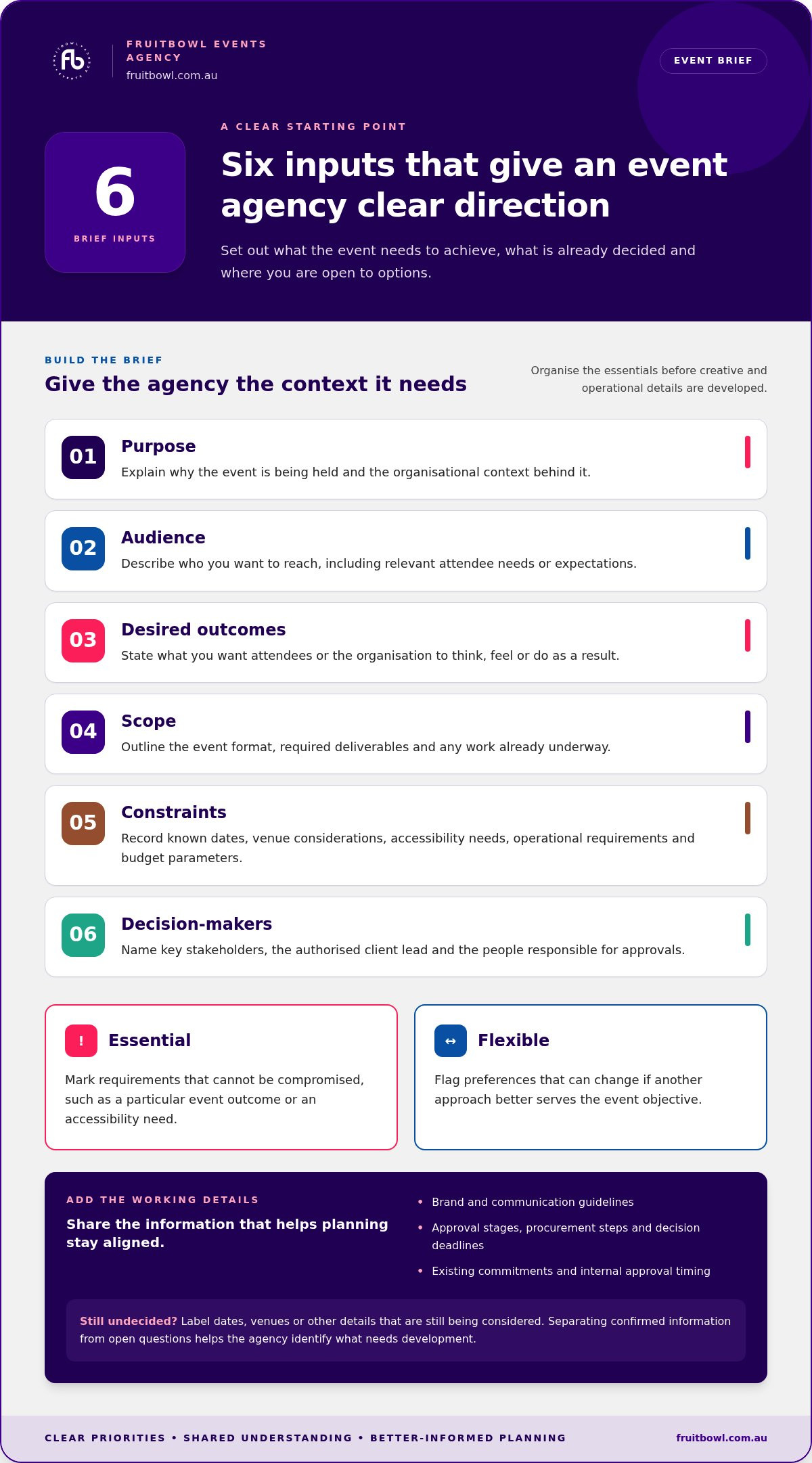
Use this sequence to organise the information:
- 1. Purpose: Explain why the event is being held and the organisational context behind it.
- 2. Audience: Describe who you want to reach, including relevant attendee needs or expectations.
- 3. Desired outcomes: State what you want attendees or the organisation to think, feel or do as a result.
- 4. Scope: Outline the event format, required deliverables and any work already underway.
- 5. Constraints: Record known dates, venue considerations, accessibility needs, operational requirements and budget parameters.
- 6. Decision-makers: Name key stakeholders, the authorised client lead and the people responsible for approvals.
Include relevant brand and communication guidelines, approval stages and any existing commitments. If a date or venue is still being considered, label it as undecided. Separating confirmed information from open questions helps the agency identify what needs development. The Event Management Education programme at High Point University highlights collaboration and communication as important parts of event work, reinforcing the value of making expectations clear from the start.
How should clients communicate priorities and constraints?
Mark each requirement as essential or flexible. An essential requirement might be a particular event outcome or an accessibility need. A flexible preference could be a creative direction that can change if another approach better serves the objective. This distinction gives the agency room to recommend alternatives without losing sight of what matters most.
Share known budget parameters, procurement steps and decision deadlines. You don’t need to prescribe how every dollar is allocated, but the agency needs a realistic framework to develop and assess options. If an internal approval process affects timing, include that too. Clear constraints help surface trade-offs early, rather than after a preferred direction has been developed.
In practice, how to collaborate with an event agency starts with an honest brief and a willingness to consider informed recommendations. For support shaping corporate events, conferences or other event programmes around clear objectives, explore Fruitbowl’s event planning approach.
Agree roles, communication and approvals before planning accelerates
Once planning is underway, unclear ownership can slow decisions and create competing instructions. Agreeing roles, communication channels and approval steps at the outset gives the client and agency a shared operating structure. It also helps the agency coordinate connected workstreams, from venue and production to talent and stakeholder liaison, while keeping the event’s objectives in view. For outdoor setups requiring specialised infrastructure, coordinating early with canopy and marquee suppliers such as VMS Event Rental (VMS Group) ensures site layouts and logistical timelines remain aligned.
Who owns which event decisions?
Use a simple responsibility map to distinguish who decides, who delivers and where both parties need to align:
- Client leads: Set objectives and organisational priorities, provide internal context, nominate stakeholders and secure internal approvals.
- Agency leads: Plan and coordinate delivery within the agreed scope, manage connected workstreams and recommend practical approaches to execution.
- Shared decisions: Align on creative direction, programme development and significant changes that could affect the event’s objectives or delivery.
Name one authorised client lead to gather internal input and send consolidated direction to the agency. This doesn’t remove other stakeholders from the process. It gives them a clear route to contribute while reducing the risk of the agency receiving conflicting comments or duplicate instructions.
How can feedback and approvals stay efficient?
Set the communication rhythm before work accelerates. Agree which channels are used for day-to-day updates, which matters need a meeting and how urgent issues should be escalated. Establish a meeting cadence that suits the project, along with response expectations and named approvers for key decisions.
Make feedback specific and tie it to the agreed objectives. Instead of saying a programme “doesn’t feel right”, explain which audience need or event priority it isn’t addressing. Where stakeholders have different views, the client lead should resolve or consolidate them before submitting feedback. This helps the agency respond to a clear brief rather than trying to reconcile conflicting preferences.
Keep a shared project document or meeting summary that records each decision, its owner and any next action. For example, after reviewing a production proposal, record what was approved, who is responsible for the next step and whether any questions remain open. This creates a reliable reference point as venue, technical production, talent and other workstreams develop in parallel.
Good governance doesn’t need to be complicated. A clear responsibility map, one client lead, agreed communication routines and a consistent record of decisions create the structure needed for how to collaborate with an event agency effectively. Review the arrangements as the project develops, especially if stakeholders, scope or approval requirements change.
Manage changes, risks and event delivery as one shared process
Even a well-developed event plan may need to adapt as details emerge. A change to the programme, talent, production or logistics can affect other parts of delivery, so assess its consequences before putting it into action. A shared process helps the client retain appropriate oversight while the agency coordinates the response across connected workstreams.
How should event changes be handled?
Log each proposed change in the shared project record, including what’s changing, why it’s needed, who can approve it and which workstreams may be affected. The agency can outline practical implications and identify workable alternatives against the event’s objectives. For example, a programme adjustment may affect technical requirements, talent coordination or the timing of other activities.
Once the appropriate decision-maker approves a change, confirm it in writing and update the relevant schedules, production information and action owners. This gives everyone a consistent reference point and reduces the chance that teams proceed using different versions of the plan. For events involving audiovisual, lighting or staging, the guide to AV management for events offers further insight into technical coordination.
How do client and agency teams prepare for event day?
Before the event, review the schedule, onsite roles, communication chain and escalation process together. Confirm who can make operational decisions, who needs to be informed and how late changes will reach the people responsible for acting on them. An update is useful only if the relevant teams receive it in time to respond.
Discuss potential risks as part of preparation, not only when an issue occurs. For each identified risk, record an owner, planned mitigation and escalation step. The client can contribute organisational context and stakeholder priorities, while the agency coordinates planning across logistics, production, talent and programme delivery. This makes risk management a working part of the event plan rather than a separate document no one consults.
Onsite, keep decision-making aligned with the agreed roles. If circumstances call for a change, the team can assess the implications, route the decision to the right person and communicate the outcome through the established channel. For a wider view of how these elements fit together, explore corporate event management.
Clear change control and practical risk planning are central to how to collaborate with an event agency through delivery. Fruitbowl’s event management brings objectives, coordination and onsite execution together as part of a connected process.
Review outcomes and build a stronger agency partnership
The event’s final day isn’t the end of the collaboration. A structured review helps you understand what the event achieved, how well delivery supported those objectives and what should inform the next project. Agree success measures before delivery, then revisit them during the review so the discussion is grounded in the original brief rather than impressions alone.
What should a post-event review cover?
Bring the client and agency together to compare agreed objectives with available evidence and stakeholder feedback. Depending on the event, this could include relevant attendance or participation information, feedback from attendees and observations from the delivery team. Consider the full experience, not only the final outcome: were decisions made at the right points, were workstreams coordinated effectively, and did the event meet the priorities set in the brief?
Review strengths as well as challenges. Discuss what supported smooth delivery, where communication or approvals could have been clearer, and whether logistics, production and programme elements worked together as intended. Keep the conversation constructive and specific. The aim is to identify useful lessons, not to assign blame.
Turn findings into actions. Record each recommendation, its owner and the next step, including any unresolved items that need follow-up. This creates a practical reference for future planning and makes improvements easier to carry forward.
How can the partnership improve over time?
Use the review to refine how you brief, communicate and make decisions together. Carry forward relevant learning about audience needs, approval pathways and operational planning, while refreshing the brief when organisational priorities or event requirements change. For future conferences, map logistical requirements against the programme so venue, timing, production and attendee needs are considered together.
A dependable partnership develops through clear expectations and honest reflection. The more consistently both sides capture decisions and apply lessons, the stronger the foundation for the next event. That’s a practical part of how to collaborate with an event agency: evaluate the work against your objectives, then use what you learn to improve the process.
Fruitbowl Events Agency brings over 28 years of event-industry experience to end-to-end planning, coordination and onsite delivery across Australia. For a complex event, align objectives, planning and delivery from the outset.
Put clear collaboration into practice
Successful event delivery starts with shared objectives and clear responsibilities. A focused brief gives the agency direction, while agreed communication and approval processes help decisions move forward without competing feedback. Keep changes and risks visible, and review the results against the objectives you set at the beginning.
That’s the practical foundation of how to collaborate with an event agency: you provide organisational context and priorities, while the agency coordinates the agreed planning and delivery. Fruitbowl brings over 28 years of event-industry experience, with end-to-end planning, coordination and onsite delivery across Australia. Integrated event production, technical direction and talent coordination connect creative intent with the work required to deliver it.
Start with the purpose of your event and the outcomes you want to achieve. Discuss your event objectives with Fruitbowl and take the next step towards a clear, well-coordinated event. With the right partnership and process in place, you can move forward with confidence.
Frequently Asked Questions
How do you start working with an event agency?
Start by sharing why the event is happening, who it needs to reach and what you want it to achieve. Include what’s already decided, any known constraints and the stakeholders involved. You don’t need a finished plan; a clear account of priorities and open questions gives the agency a useful starting point. That’s the first step in how to collaborate with an event agency with clarity and purpose.
What should I include in an event agency brief?
Include the event purpose, audience, intended outcomes, proposed format and relevant organisational context. Add known dates, venue considerations, accessibility needs, operational constraints and required deliverables. Clarify which requirements are essential and which preferences can be explored. It’s also useful to identify decision-makers, approval stages, available budget parameters and any existing brand or communication guidelines. Mark details as confirmed or still under consideration so the agency can plan accordingly.
Who makes the final decisions when collaborating with an event agency?
The client generally retains final authority over organisational objectives, priorities and internal approvals. The agency leads delivery planning and coordination within the agreed scope. Some matters, such as creative direction, programme development or significant changes, benefit from joint discussion before the authorised client decision-maker approves the way forward. Agreeing these boundaries early helps the agency act confidently while ensuring decisions remain aligned with your organisation’s needs.
How often should a client meet with an event agency?
Set a meeting cadence that reflects the event’s complexity, timeline and current planning activity. Agree regular project check-ins, then add focused discussions when a key decision, approval or change needs attention. Between meetings, use an agreed channel for updates and action tracking. A meeting summary should record decisions, owners and next steps. The aim is consistent communication, not unnecessary meetings or gaps that leave important questions unresolved.
What happens if event requirements change during planning?
Record the proposed change, why it’s needed, who can approve it and which workstreams it may affect. Ask the agency to outline the delivery implications and any practical alternatives before a decision is made. Once approved, confirm the change in writing and update the shared project record and relevant schedules. This process helps the client understand the impact before implementation and keeps teams working from the same plan.
Can an event agency manage suppliers, production and talent coordination?
Yes. Event agencies can coordinate suppliers and connected delivery workstreams as part of an agreed event scope. Fruitbowl Events Agency supports venue sourcing, logistics, stakeholder liaison, technical production and talent coordination, with onsite delivery across Australia. For a conference, this can mean aligning programme requirements with production and talent needs, so the different elements support the event’s objectives and are planned as a coordinated whole.
How do you measure whether collaboration with an event agency was successful?
Set measures of success before delivery and review them against the original objectives afterwards. Consider available evidence alongside attendee and stakeholder feedback, then assess the delivery process: how well decisions were made, communication flowed and workstreams were coordinated. Record what worked, what needs improvement and any unresolved actions, with owners and next steps. This turns the review into practical guidance for the next event, rather than a general impression of how things went.
A successful partnership with an event agency depends less on handing over control and more on agreeing who owns each decision. Learning how to collaborate with an event agency starts with a clear division of responsibilities: you bring the objectives, priorities and approvals; the agency turns them into a coordinated plan and delivers the work. That clarity helps keep creative ideas connected to practical requirements.
It’s understandable to feel unsure about what to include in an initial brief, how often to communicate or who has the final say. Without agreed processes, feedback can become fragmented, decisions can stall and budget constraints may surface too late. A constructive working relationship makes responsibilities clear from the outset.
This guide explains how to set up that relationship, from defining objectives and sharing budget parameters to agreeing communication, feedback and approval processes. You’ll also see how client and agency roles evolve through planning, production and onsite delivery, keeping creative ambition aligned with dependable execution.
Key Takeaways
- Define the event’s purpose, audience and desired outcomes before briefing an agency, then distinguish essential requirements from preferences.
- Clarify who makes decisions, who coordinates delivery and how approvals will work to keep feedback consistent.
- Document a process for assessing proposed changes, understanding their implications and approving them before they affect delivery.
- Record risk owners, mitigation steps and escalation pathways as part of shared planning.
- Learning how to collaborate with an event agency includes setting success measures early and reviewing outcomes against objectives after the event.
Table of Contents
- How to collaborate with an event agency from the first conversation
- Build an event brief that gives the agency a clear direction
- Agree roles, communication and approvals before planning accelerates
- Manage changes, risks and event delivery as one shared process
- Review outcomes and build a stronger agency partnership
How to collaborate with an event agency from the first conversation
Clients want an event that feels distinctive and achieves its purpose, without losing sight of who makes decisions or how delivery will be managed. The foundation of how to collaborate with an event agency is a shared understanding of the objectives, responsibilities, decision points and delivery process. Agree these early so creative development can progress alongside practical planning.
The client brings the organisational context: why the event is happening, who it needs to reach, what success means and which priorities cannot be compromised. The agency manages the agreed planning and delivery process, translating those priorities into connected workstreams such as logistics, stakeholder coordination, production and onsite execution. This reflects the breadth of event management, where planning, coordination and execution work together to bring an event to life.
Good collaboration isn’t micromanagement, where every operational decision needs client direction. Nor is it unclear delegation, where the agency is expected to infer priorities or make decisions without authority. Treating an agency as a last-minute supplier can also limit its ability to shape a coherent plan. Instead, agree what the agency can lead, what the client must decide and when each decision is needed. That balance supports creative thinking while keeping scope, budget and delivery requirements visible.
What does good event-agency collaboration look like?
A productive partnership combines transparent communication with clearly defined responsibilities. The client contributes internal knowledge, stakeholder expectations and timely feedback. The agency applies event expertise to develop options, coordinate moving parts and flag practical considerations. As planning progresses, both parties draw on their knowledge to make informed decisions. For example, assess a creative concept not only for its fit with the event’s purpose, but also for how it connects with production and onsite delivery.
When should the client involve an event agency?
Involve an agency early enough for it to understand the objectives before major decisions shape the scope and delivery approach. Early input is particularly useful when several stakeholders need to align, logistics are complex, or production elements such as audiovisual, lighting and staging need to work together. The right starting point depends on the event brief and project needs, but sharing context early gives the agency a stronger basis for planning.
That doesn’t mean every detail must be settled before the first conversation. Start with a clear account of the event’s purpose, known constraints and key questions. The client and agency can then identify what needs a decision, what needs further development and how responsibilities will be shared. Fruitbowl Events Agency brings over 28 years of event-industry experience to this process, coordinating client objectives with planning and onsite delivery across a range of event types.
Build an event brief that gives the agency a clear direction
A useful brief gives an agency enough context to make considered recommendations without requiring you to resolve every creative or operational detail in advance. Set out what the event needs to achieve, what’s already decided and where you’re open to options. This helps the agency shape a plan around your objectives rather than assumptions.
What information belongs in an event brief?
Use this sequence to organise the information:
- 1. Purpose: Explain why the event is being held and the organisational context behind it.
- 2. Audience: Describe who you want to reach, including relevant attendee needs or expectations.
- 3. Desired outcomes: State what you want attendees or the organisation to think, feel or do as a result.
- 4. Scope: Outline the event format, required deliverables and any work already underway.
- 5. Constraints: Record known dates, venue considerations, accessibility needs, operational requirements and budget parameters.
- 6. Decision-makers: Name key stakeholders, the authorised client lead and the people responsible for approvals.
Include relevant brand and communication guidelines, approval stages and any existing commitments. If a date or venue is still being considered, label it as undecided. Separating confirmed information from open questions helps the agency identify what needs development. The Event Management Education programme at High Point University highlights collaboration and communication as important parts of event work, reinforcing the value of making expectations clear from the start.
How should clients communicate priorities and constraints?
Mark each requirement as essential or flexible. An essential requirement might be a particular event outcome or an accessibility need. A flexible preference could be a creative direction that can change if another approach better serves the objective. This distinction gives the agency room to recommend alternatives without losing sight of what matters most.
Share known budget parameters, procurement steps and decision deadlines. You don’t need to prescribe how every dollar is allocated, but the agency needs a realistic framework to develop and assess options. If an internal approval process affects timing, include that too. Clear constraints help surface trade-offs early, rather than after a preferred direction has been developed.
In practice, how to collaborate with an event agency starts with an honest brief and a willingness to consider informed recommendations. For support shaping corporate events, conferences or other event programmes around clear objectives, explore Fruitbowl’s event planning approach.
Agree roles, communication and approvals before planning accelerates
Once planning is underway, unclear ownership can slow decisions and create competing instructions. Agreeing roles, communication channels and approval steps at the outset gives the client and agency a shared operating structure. It also helps the agency coordinate connected workstreams, from venue and production to talent and stakeholder liaison, while keeping the event’s objectives in view.
Who owns which event decisions?
Use a simple responsibility map to distinguish who decides, who delivers and where both parties need to align:
- Client leads: Set objectives and organisational priorities, provide internal context, nominate stakeholders and secure internal approvals.
- Agency leads: Plan and coordinate delivery within the agreed scope, manage connected workstreams and recommend practical approaches to execution.
- Shared decisions: Align on creative direction, programme development and significant changes that could affect the event’s objectives or delivery.
Name one authorised client lead to gather internal input and send consolidated direction to the agency. This doesn’t remove other stakeholders from the process. It gives them a clear route to contribute while reducing the risk of the agency receiving conflicting comments or duplicate instructions.
How can feedback and approvals stay efficient?
Set the communication rhythm before work accelerates. Agree which channels are used for day-to-day updates, which matters need a meeting and how urgent issues should be escalated. Establish a meeting cadence that suits the project, along with response expectations and named approvers for key decisions.
Make feedback specific and tie it to the agreed objectives. Instead of saying a programme “doesn’t feel right”, explain which audience need or event priority it isn’t addressing. Where stakeholders have different views, the client lead should resolve or consolidate them before submitting feedback. This helps the agency respond to a clear brief rather than trying to reconcile conflicting preferences.
Keep a shared project document or meeting summary that records each decision, its owner and any next action. For example, after reviewing a production proposal, record what was approved, who is responsible for the next step and whether any questions remain open. This creates a reliable reference point as venue, technical production, talent and other workstreams develop in parallel.
Good governance doesn’t need to be complicated. A clear responsibility map, one client lead, agreed communication routines and a consistent record of decisions create the structure needed for how to collaborate with an event agency effectively. Review the arrangements as the project develops, especially if stakeholders, scope or approval requirements change.
Manage changes, risks and event delivery as one shared process
Even a well-developed event plan may need to adapt as details emerge. A change to the programme, talent, production or logistics can affect other parts of delivery, so assess its consequences before putting it into action. A shared process helps the client retain appropriate oversight while the agency coordinates the response across connected workstreams.
How should event changes be handled?
Log each proposed change in the shared project record, including what’s changing, why it’s needed, who can approve it and which workstreams may be affected. The agency can outline practical implications and identify workable alternatives against the event’s objectives. For example, a programme adjustment may affect technical requirements, talent coordination or the timing of other activities.
Once the appropriate decision-maker approves a change, confirm it in writing and update the relevant schedules, production information and action owners. This gives everyone a consistent reference point and reduces the chance that teams proceed using different versions of the plan. For events involving audiovisual, lighting or staging, the guide to AV management for events offers further insight into technical coordination.
How do client and agency teams prepare for event day?
Before the event, review the schedule, onsite roles, communication chain and escalation process together. Confirm who can make operational decisions, who needs to be informed and how late changes will reach the people responsible for acting on them. An update is useful only if the relevant teams receive it in time to respond.
Discuss potential risks as part of preparation, not only when an issue occurs. For each identified risk, record an owner, planned mitigation and escalation step. The client can contribute organisational context and stakeholder priorities, while the agency coordinates planning across logistics, production, talent and programme delivery. This makes risk management a working part of the event plan rather than a separate document no one consults.
Onsite, keep decision-making aligned with the agreed roles. If circumstances call for a change, the team can assess the implications, route the decision to the right person and communicate the outcome through the established channel. For a wider view of how these elements fit together, explore corporate event management.
Clear change control and practical risk planning are central to how to collaborate with an event agency through delivery. Fruitbowl’s event management brings objectives, coordination and onsite execution together as part of a connected process.
Review outcomes and build a stronger agency partnership
The event’s final day isn’t the end of the collaboration. A structured review helps you understand what the event achieved, how well delivery supported those objectives and what should inform the next project. Agree success measures before delivery, then revisit them during the review so the discussion is grounded in the original brief rather than impressions alone.
What should a post-event review cover?
Bring the client and agency together to compare agreed objectives with available evidence and stakeholder feedback. Depending on the event, this could include relevant attendance or participation information, feedback from attendees and observations from the delivery team. Consider the full experience, not only the final outcome: were decisions made at the right points, were workstreams coordinated effectively, and did the event meet the priorities set in the brief?
Review strengths as well as challenges. Discuss what supported smooth delivery, where communication or approvals could have been clearer, and whether logistics, production and programme elements worked together as intended. Keep the conversation constructive and specific. The aim is to identify useful lessons, not to assign blame.
Turn findings into actions. Record each recommendation, its owner and the next step, including any unresolved items that need follow-up. This creates a practical reference for future planning and makes improvements easier to carry forward.
How can the partnership improve over time?
Use the review to refine how you brief, communicate and make decisions together. Carry forward relevant learning about audience needs, approval pathways and operational planning, while refreshing the brief when organisational priorities or event requirements change. For future conferences, map logistical requirements against the programme so venue, timing, production and attendee needs are considered together.
A dependable partnership develops through clear expectations and honest reflection. The more consistently both sides capture decisions and apply lessons, the stronger the foundation for the next event. That’s a practical part of how to collaborate with an event agency: evaluate the work against your objectives, then use what you learn to improve the process.
Fruitbowl Events Agency brings over 28 years of event-industry experience to end-to-end planning, coordination and onsite delivery across Australia. For a complex event, align objectives, planning and delivery from the outset.
Put clear collaboration into practice
Successful event delivery starts with shared objectives and clear responsibilities. A focused brief gives the agency direction, while agreed communication and approval processes help decisions move forward without competing feedback. Keep changes and risks visible, and review the results against the objectives you set at the beginning.
That’s the practical foundation of how to collaborate with an event agency: you provide organisational context and priorities, while the agency coordinates the agreed planning and delivery. Fruitbowl brings over 28 years of event-industry experience, with end-to-end planning, coordination and onsite delivery across Australia. Integrated event production, technical direction and talent coordination connect creative intent with the work required to deliver it.
Start with the purpose of your event and the outcomes you want to achieve. Discuss your event objectives with Fruitbowl and take the next step towards a clear, well-coordinated event. With the right partnership and process in place, you can move forward with confidence.
Frequently Asked Questions
How do you start working with an event agency?
Start by sharing why the event is happening, who it needs to reach and what you want it to achieve. Include what’s already decided, any known constraints and the stakeholders involved. You don’t need a finished plan; a clear account of priorities and open questions gives the agency a useful starting point. That’s the first step in how to collaborate with an event agency with clarity and purpose.
What should I include in an event agency brief?
Include the event purpose, audience, intended outcomes, proposed format and relevant organisational context. Add known dates, venue considerations, accessibility needs, operational constraints and required deliverables. Clarify which requirements are essential and which preferences can be explored. It’s also useful to identify decision-makers, approval stages, available budget parameters and any existing brand or communication guidelines. Mark details as confirmed or still under consideration so the agency can plan accordingly.
Who makes the final decisions when collaborating with an event agency?
The client generally retains final authority over organisational objectives, priorities and internal approvals. The agency leads delivery planning and coordination within the agreed scope. Some matters, such as creative direction, programme development or significant changes, benefit from joint discussion before the authorised client decision-maker approves the way forward. Agreeing these boundaries early helps the agency act confidently while ensuring decisions remain aligned with your organisation’s needs.
How often should a client meet with an event agency?
Set a meeting cadence that reflects the event’s complexity, timeline and current planning activity. Agree regular project check-ins, then add focused discussions when a key decision, approval or change needs attention. Between meetings, use an agreed channel for updates and action tracking. A meeting summary should record decisions, owners and next steps. The aim is consistent communication, not unnecessary meetings or gaps that leave important questions unresolved.
What happens if event requirements change during planning?
Record the proposed change, why it’s needed, who can approve it and which workstreams it may affect. Ask the agency to outline the delivery implications and any practical alternatives before a decision is made. Once approved, confirm the change in writing and update the shared project record and relevant schedules. This process helps the client understand the impact before implementation and keeps teams working from the same plan.
Can an event agency manage suppliers, production and talent coordination?
Yes. Event agencies can coordinate suppliers and connected delivery workstreams as part of an agreed event scope. Fruitbowl Events Agency supports venue sourcing, logistics, stakeholder liaison, technical production and talent coordination, with onsite delivery across Australia. For a conference, this can mean aligning programme requirements with production and talent needs, so the different elements support the event’s objectives and are planned as a coordinated whole.
How do you measure whether collaboration with an event agency was successful?
Set measures of success before delivery and review them against the original objectives afterwards. Consider available evidence alongside attendee and stakeholder feedback, then assess the delivery process: how well decisions were made, communication flowed and workstreams were coordinated. Record what worked, what needs improvement and any unresolved actions, with owners and next steps. This turns the review into practical guidance for the next event, rather than a general impression of how things went.
OUR BLOG
Event Insights & Expertise
Our blog is your go-to resource for all things events. From expert insights and the latest industry trends to practical planning tips, we share everything you need to deliver standout experiences.
Contact Us