A successful event needs more than a strong idea. It needs a producer who can turn that idea into a coordinated experience. Knowing what to expect from your event producer means understanding how they shape the creative concept, align the people and practical details, and oversee delivery on the day. Their work connects the brief to the guest experience while keeping decisions, budgets and timelines moving together.
You can expect clear communication and careful coordination of moving parts, while still having room to contribute your perspective. A producer brings structure to the process, but your event’s goals and audience should guide decisions about format, content and delivery. This balance keeps creative ambition grounded in what the event needs to achieve.
This guide explains how an event producer’s responsibilities relate to event management, how budgets and schedules are coordinated, and why relevant experience matters when choosing a producer. It covers what to expect from the initial creative pitch through planning, problem-solving and event-day delivery, so you can assess the working relationship with confidence.
Key Takeaways
- Understand how a producer aligns clients, suppliers, creatives and operational teams around a shared event brief.
- See how a creative concept develops into a cohesive guest experience and is delivered on the day.
- Learn how budget priorities, scheduling and milestones work together to keep event plans aligned.
- Assess whether a producer’s experience matches your event’s format, audience and practical demands.
Table of Contents
What is the role of an event producer?
An event producer connects the event brief to the people, suppliers and decisions needed for delivery. Their role is to coordinate these moving parts while keeping the intended guest experience in focus.
Coordinating clients and event teams
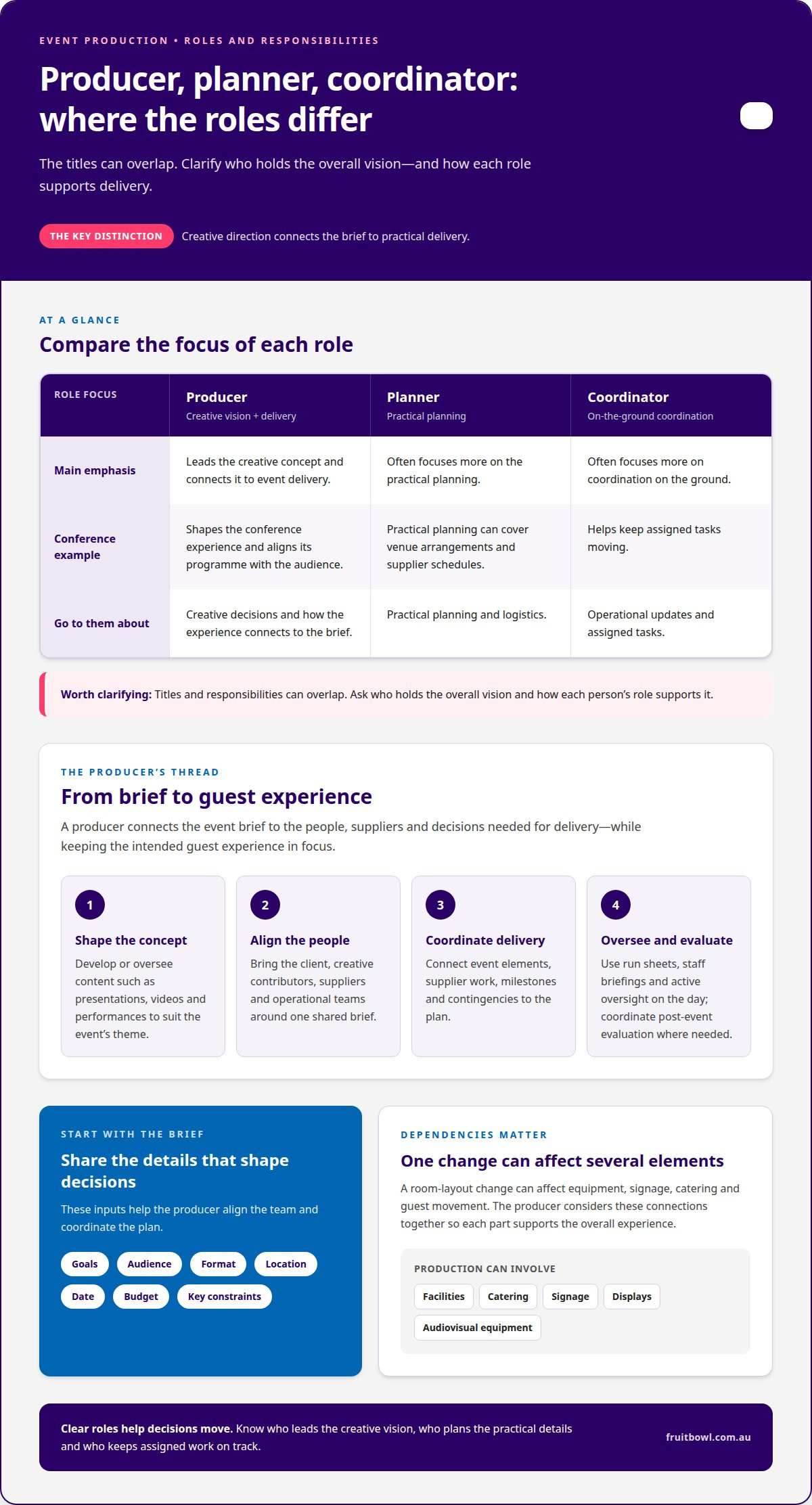
An event producer brings the client, creative contributors, suppliers and operational teams together around one event brief. This coordination matters because each group needs to understand its responsibilities and how its work affects the others.
To establish the brief, share the event’s goals, audience, format, location, date, budget and key constraints. For a conference, for example, the programme, guest requirements and venue details help the producer align speaker needs with supplier and operations planning. Clear decisions and timely feedback also help resolve challenges before they disrupt delivery.
Coordinating event elements and vendors
Coordination means sequencing event elements and supplier work so each part supports the overall experience. A change to one element, such as a room layout, can affect equipment, signage, catering and guest movement, so these dependencies need to be considered together.
Distinguishing producers from planners and coordinators
An event producer leads the creative concept and connects it to delivery. Event planners and coordinators often focus more on practical planning or on-the-ground coordination. Titles and responsibilities can overlap, so clarify who holds the overall vision and how each role supports it.
For example, a producer may shape a conference’s experience and align its programme with the audience, while practical planning covers venue arrangements and supplier schedules. Coordinators help keep assigned tasks moving. Understanding this division tells you whom to approach about creative decisions, logistics or operational updates.
Arranging licences, permits and insurance
An event producer may coordinate licence, permit and insurance arrangements by mapping planned activities, venue conditions and the responsible parties. The relevant steps depend on the event’s location, format and activities. The producer connects the event plan with the appropriate authority, venue and insurance contacts.
For example, the producer can identify which planned elements need documentation, track responsibilities and align submission timing with other event milestones. Share venue details, the programme, supplier roles and planned activities early. This gives the producer a clear basis for coordinating paperwork and keeping operational teams informed.
The event producer’s role from creative pitch to event-day delivery
A producer takes an event from its creative pitch through planning, execution and post-event evaluation. At each stage, the concept becomes decisions, responsibilities and deliverables that support the intended experience.
The producer’s role and significance
An event producer shapes the overall concept and aligns the content, people and practical delivery around it. An event succeeds when its individual elements work together as a coherent experience for attendees.
From the pitch, the producer can develop or oversee presentations, videos and performances that suit the event’s theme. They can also plan venue layouts around guest flow and operational constraints. For example, placing food stations, bars and brand installations means balancing the intended experience with how attendees move through the space.
Creative decisions also need practical controls. Producers plan contingencies for potential problems, track milestones and manage risks to keep key deliverables on course. This structure helps creative teams and operational staff work towards the same outcome.
Event-day and post-event deliverables
On event day, the producer turns the plan into coordinated delivery through detailed run sheets, staff briefings and active oversight of the programme. These give the team a shared reference for timing, responsibilities and changes as the event unfolds.
After an exhibition, the producer can coordinate an evaluation and deliver a detailed report. This gives the organising team a record to review against its objectives and use in future planning. The producer’s role can therefore extend beyond the final presentation or guests’ departure.
For a virtual event, production also covers planning and execution, coordinating the programme and content for online attendance. This format can be particularly beneficial when hundreds or thousands of attendees are watching. Whether virtual or in person, the producer connects the creative plan to the format and delivery requirements.
For events that need creative direction alongside coordinated delivery, explore corporate event production.
Budgeting, scheduling and timelines
An event producer aligns spending and deadlines with the agreed brief, strategic direction and desired outcomes. These controls are connected: a programme change can affect supplier requirements, while a venue decision can alter the schedule and budget. The producer develops a plan linking each priority to a cost, owner and milestone, then tracks progress against it.
Budget planning starts by identifying the event’s essential elements and the resources each requires. The producer can assess where to allocate funds for impact, where efficiencies are practical and how supplier proposals fit the brief. For example, a conference’s speaker programme, audiovisual setup and catering all draw on the budget, so decisions should reflect audience needs and event objectives. Clear priorities make trade-offs easier to assess.
Scheduling turns those decisions into linked milestones. Venue arrangements, supplier bookings, content approvals and production preparation each need an owner and due date. The producer maps dependencies so a late presentation approval or revised room layout does not go unnoticed in later work. Regular progress reviews can reveal delays early and clarify which decisions need your input.
When something unexpected changes, the producer assesses the impact before adjusting the plan. A supplier delay, for instance, may affect setup sequencing or the event programme. The producer identifies affected tasks, communicates the implications to relevant people and agrees on a practical adjustment that protects essential outcomes. Recording approved changes keeps budget and schedule updates aligned.
Your input is part of this control process. A clear brief, agreed priorities and timely feedback help the producer make informed recommendations instead of assuming which elements matter most. As planning develops, document decisions alongside their budget and timeline effects. This gives everyone a consistent reference and makes emerging trade-offs easier to understand.
Expect the producer to keep the brief, spending plan and schedule connected, rather than manage them as separate documents. This means tracking deliverables, flagging decisions that could affect costs or timing, and coordinating updates with the people responsible for each task. The result is a practical framework for directing resources and keeping planning aligned with the event’s intended outcomes.
Choosing a producer with relevant event experience
Relevant experience means producing events with demands similar to yours, not simply holding an event title. Compare the format, audience, venue requirements and technical complexity. A producer experienced with conferences may understand speaker transitions and audiovisual cues; a public event may bring different site and crowd-flow considerations. The closer the experience matches your brief, the more directly it can inform planning decisions.
Look for examples that show the producer’s role and contribution, not just a list of event names. A useful case study explains the event’s objectives, the producer’s responsibilities and how the team handled specific challenges. For instance, ask how a change to a stage layout affected technical setup, attendee movement and the programme. The response can reveal how the producer connects creative decisions with operational detail.
References can add context to those examples. Speak with previous clients about communication, decision-making and delivery against the agreed brief. Ask how the producer kept stakeholders aligned when priorities changed and managed issues during execution. Specific accounts of collaboration are more useful than general praise because they show how the working relationship functioned.
Use your event’s defining demands as selection criteria: audience profile, format, technical needs and the experience you want attendees to have. Then assess whether the producer’s examples and client references demonstrate sound judgement across those demands. This gives you a grounded basis for deciding whether their experience fits your event, rather than relying on broad claims or a familiar title.
Discuss your event requirements with a team experienced in coordinating event delivery.
Fruitbowl Events Agency
Fruitbowl Events Agency brings creative direction and coordinated delivery together for events with multiple stakeholders, suppliers and operational requirements. Turn to the team when you need support shaping an event concept and carrying it through planning and on-site delivery, rather than managing each moving part independently.
For a conference, this can mean aligning the programme, speakers, venue requirements and attendee experience. For a public event or activation, it means connecting the creative idea with practical delivery. Fruitbowl Events Agency works across Corporate Events, Festivals & Public Events, Conferences & Seminars, Government Activations and Brand Activations.
Contact Fruitbowl Events Agency to discuss your event objectives and production requirements.
Set your next event in motion
A clear understanding of what to expect from your event producer gives you a stronger starting point for the decisions ahead. Before planning begins, define the change you want the event to create for its audience, then use that objective to guide creative choices and practical trade-offs. It gives the team a shared measure for deciding what belongs in the experience and what can be simplified.
Your next step is to bring the event’s purpose, audience and priorities into one conversation. From there, the production approach can take shape around what matters most, with responsibilities and decisions made visible as planning progresses. A considered start turns an ambitious idea into work the whole team can act on.
Contact Fruitbowl Events Agency to discuss your event and the production support you need. With a clear brief and the right working partnership, you can move forward with purpose and make space for a compelling event experience.
Frequently Asked Questions
What does an event producer do?
An event producer translates an event’s purpose into a coherent experience, connecting its creative direction with the work required to deliver it. For a brand activation, for example, the producer can help align the core message with how attendees encounter the event. This keeps the experience focused on its intended purpose rather than treating each activity as a separate element.
What should you expect from an event producer during the planning process?
To understand what to expect from your event producer, look for a clear process for decisions, responsibilities and updates. After a creative review, for example, you should know which ideas are approved, which need refinement and who will progress them. This makes your input useful at key points and helps prevent contributors from acting on conflicting directions.
What questions should you ask before hiring an event producer?
Ask how the producer would approach your event’s objectives, who would lead the work and how you’ll contribute decisions. To clarify what to expect from your event producer, ask for an example of a comparable event and what they personally delivered. Discuss how they handle changing priorities and what approvals they’ll need from you. The answers help establish a practical working fit.
A successful event needs more than a strong idea. It needs a producer who can turn that idea into a coordinated experience. Knowing what to expect from your event producer means understanding how they shape the creative concept, align the people and practical details, and oversee delivery on the day. Their work connects the brief to the guest experience while keeping decisions, budgets and timelines moving together.
You can expect clear communication and careful coordination of moving parts, while still having room to contribute your perspective. A producer brings structure to the process, but your event’s goals and audience should guide decisions about format, content and delivery. This balance keeps creative ambition grounded in what the event needs to achieve.
This guide explains how an event producer’s responsibilities relate to event management, how budgets and schedules are coordinated, and why relevant experience matters when choosing a producer. It covers what to expect from the initial creative pitch through planning, problem-solving and event-day delivery, so you can assess the working relationship with confidence.
Key Takeaways
- Understand how a producer aligns clients, suppliers, creatives and operational teams around a shared event brief.
- See how a creative concept develops into a cohesive guest experience and is delivered on the day.
- Learn how budget priorities, scheduling and milestones work together to keep event plans aligned.
- Assess whether a producer’s experience matches your event’s format, audience and practical demands.
Table of Contents
What is the role of an event producer?
An event producer connects the event brief to the people, suppliers and decisions needed for delivery. Their role is to coordinate these moving parts while keeping the intended guest experience in focus.
Coordinating clients and event teams
An event producer brings the client, creative contributors, suppliers and operational teams together around one event brief. This coordination matters because each group needs to understand its responsibilities and how its work affects the others.
To establish the brief, share the event’s goals, audience, format, location, date, budget and key constraints. For a conference, for example, the programme, guest requirements and venue details help the producer align speaker needs with supplier and operations planning. Clear decisions and timely feedback also help resolve challenges before they disrupt delivery.
Coordinating event elements and vendors
Coordination means sequencing event elements and supplier work so each part supports the overall experience. A change to one element, such as a room layout, can affect equipment, signage, catering and guest movement, so these dependencies need to be considered together.
Event production can involve coordinating facilities, catering, signage, displays and audiovisual equipment. The Australian Bureau of Statistics also identifies accommodation, transport and social events among arrangements an event organiser may make for participants. A producer aligns relevant suppliers, responsibilities and timing, then tracks how each fits the event plan.
Distinguishing producers from planners and coordinators
An event producer leads the creative concept and connects it to delivery. Event planners and coordinators often focus more on practical planning or on-the-ground coordination. Titles and responsibilities can overlap, so clarify who holds the overall vision and how each role supports it.
For example, a producer may shape a conference’s experience and align its programme with the audience, while practical planning covers venue arrangements and supplier schedules. Coordinators help keep assigned tasks moving. Understanding this division tells you whom to approach about creative decisions, logistics or operational updates.
Arranging licences, permits and insurance
An event producer may coordinate licence, permit and insurance arrangements by mapping planned activities, venue conditions and the responsible parties. The relevant steps depend on the event’s location, format and activities. The producer connects the event plan with the appropriate authority, venue and insurance contacts.
For example, the producer can identify which planned elements need documentation, track responsibilities and align submission timing with other event milestones. Share venue details, the programme, supplier roles and planned activities early. This gives the producer a clear basis for coordinating paperwork and keeping operational teams informed.
The event producer’s role from creative pitch to event-day delivery
A producer takes an event from its creative pitch through planning, execution and post-event evaluation. At each stage, the concept becomes decisions, responsibilities and deliverables that support the intended experience.
The producer’s role and significance
An event producer shapes the overall concept and aligns the content, people and practical delivery around it. An event succeeds when its individual elements work together as a coherent experience for attendees.
From the pitch, the producer can develop or oversee presentations, videos and performances that suit the event’s theme. They can also plan venue layouts around guest flow and operational constraints. For example, placing food stations, bars and brand installations means balancing the intended experience with how attendees move through the space.
Creative decisions also need practical controls. Producers plan contingencies for potential problems, track milestones and manage risks to keep key deliverables on course. This structure helps creative teams and operational staff work towards the same outcome.
Event-day and post-event deliverables
On event day, the producer turns the plan into coordinated delivery through detailed run sheets, staff briefings and active oversight of the programme. These give the team a shared reference for timing, responsibilities and changes as the event unfolds.
After an exhibition, the producer can coordinate an evaluation and deliver a detailed report. This gives the organising team a record to review against its objectives and use in future planning. The producer’s role can therefore extend beyond the final presentation or guests’ departure.
For a virtual event, production also covers planning and execution, coordinating the programme and content for online attendance. This format can be particularly beneficial when hundreds or thousands of attendees are watching. Whether virtual or in person, the producer connects the creative plan to the format and delivery requirements.
For events that need creative direction alongside coordinated delivery, explore corporate event production.
Budgeting, scheduling and timelines
An event producer aligns spending and deadlines with the agreed brief, strategic direction and desired outcomes. These controls are connected: a programme change can affect supplier requirements, while a venue decision can alter the schedule and budget. The producer develops a plan linking each priority to a cost, owner and milestone, then tracks progress against it.
Budget planning starts by identifying the event’s essential elements and the resources each requires. The producer can assess where to allocate funds for impact, where efficiencies are practical and how supplier proposals fit the brief. For example, a conference’s speaker programme, audiovisual setup and catering all draw on the budget, so decisions should reflect audience needs and event objectives. Clear priorities make trade-offs easier to assess.
Scheduling turns those decisions into linked milestones. Venue arrangements, supplier bookings, content approvals and production preparation each need an owner and due date. The producer maps dependencies so a late presentation approval or revised room layout does not go unnoticed in later work. Regular progress reviews can reveal delays early and clarify which decisions need your input.
When something unexpected changes, the producer assesses the impact before adjusting the plan. A supplier delay, for instance, may affect setup sequencing or the event programme. The producer identifies affected tasks, communicates the implications to relevant people and agrees on a practical adjustment that protects essential outcomes. Recording approved changes keeps budget and schedule updates aligned.
Your input is part of this control process. A clear brief, agreed priorities and timely feedback help the producer make informed recommendations instead of assuming which elements matter most. As planning develops, document decisions alongside their budget and timeline effects. This gives everyone a consistent reference and makes emerging trade-offs easier to understand.
Expect the producer to keep the brief, spending plan and schedule connected, rather than manage them as separate documents. This means tracking deliverables, flagging decisions that could affect costs or timing, and coordinating updates with the people responsible for each task. The result is a practical framework for directing resources and keeping planning aligned with the event’s intended outcomes.
Choosing a producer with relevant event experience
Relevant experience means producing events with demands similar to yours, not simply holding an event title. Compare the format, audience, venue requirements and technical complexity. A producer experienced with conferences may understand speaker transitions and audiovisual cues; a public event may bring different site and crowd-flow considerations. The closer the experience matches your brief, the more directly it can inform planning decisions.
Look for examples that show the producer’s role and contribution, not just a list of event names. A useful case study explains the event’s objectives, the producer’s responsibilities and how the team handled specific challenges. For instance, ask how a change to a stage layout affected technical setup, attendee movement and the programme. The response can reveal how the producer connects creative decisions with operational detail.
References can add context to those examples. Speak with previous clients about communication, decision-making and delivery against the agreed brief. Ask how the producer kept stakeholders aligned when priorities changed and managed issues during execution. Specific accounts of collaboration are more useful than general praise because they show how the working relationship functioned.
Risks include a mismatch between the producer’s experience and your event’s format, unclear responsibilities, or overlooked technical requirements. Reduce these risks by aligning the brief, deliverables and decision-making roles before planning advances. For example, clarify who approves programme changes and who coordinates technical suppliers. A producer should also explain contingencies relevant to the event’s specific constraints.
Use your event’s defining demands as selection criteria: audience profile, format, technical needs and the experience you want attendees to have. Then assess whether the producer’s examples and client references demonstrate sound judgement across those demands. This gives you a grounded basis for deciding whether their experience fits your event, rather than relying on broad claims or a familiar title.
Discuss your event requirements with a team experienced in coordinating event delivery.
Fruitbowl Events Agency
Fruitbowl Events Agency brings creative direction and coordinated delivery together for events with multiple stakeholders, suppliers and operational requirements. Turn to the team when you need support shaping an event concept and carrying it through planning and on-site delivery, rather than managing each moving part independently.
For a conference, this can mean aligning the programme, speakers, venue requirements and attendee experience. For a public event or activation, it means connecting the creative idea with practical delivery. Fruitbowl Events Agency works across Corporate Events, Festivals & Public Events, Conferences & Seminars, Government Activations and Brand Activations.
Contact Fruitbowl Events Agency to discuss your event objectives and production requirements.
Set your next event in motion
A clear understanding of what to expect from your event producer gives you a stronger starting point for the decisions ahead. Before planning begins, define the change you want the event to create for its audience, then use that objective to guide creative choices and practical trade-offs. It gives the team a shared measure for deciding what belongs in the experience and what can be simplified.
Your next step is to bring the event’s purpose, audience and priorities into one conversation. From there, the production approach can take shape around what matters most, with responsibilities and decisions made visible as planning progresses. A considered start turns an ambitious idea into work the whole team can act on.
Contact Fruitbowl Events Agency to discuss your event and the production support you need. With a clear brief and the right working partnership, you can move forward with purpose and make space for a compelling event experience.
Frequently Asked Questions
What does an event producer do?
An event producer translates an event’s purpose into a coherent experience, connecting its creative direction with the work required to deliver it. For a brand activation, for example, the producer can help align the core message with how attendees encounter the event. This keeps the experience focused on its intended purpose rather than treating each activity as a separate element.
What should you expect from an event producer during the planning process?
To understand what to expect from your event producer, look for a clear process for decisions, responsibilities and updates. After a creative review, for example, you should know which ideas are approved, which need refinement and who will progress them. This makes your input useful at key points and helps prevent contributors from acting on conflicting directions.
What questions should you ask before hiring an event producer?
Ask how the producer would approach your event’s objectives, who would lead the work and how you’ll contribute decisions. To clarify what to expect from your event producer, ask for an example of a comparable event and what they personally delivered. Discuss how they handle changing priorities and what approvals they’ll need from you. The answers help establish a practical working fit.
OUR BLOG
Event Insights & Expertise
Our blog is your go-to resource for all things events. From expert insights and the latest industry trends to practical planning tips, we share everything you need to deliver standout experiences.
Contact Us