The event isn’t over when the room clears. Post-event engagement is the planned follow-up that keeps people learning, sharing feedback and taking relevant next steps; effective post-event engagement strategies connect those actions to the outcomes the event was designed to achieve. A survey link and useful resources can be shared 2–3 days after the event, while the experience is still fresh.
It’s easy to focus on event delivery and leave follow-up until later. A thoughtful sequence carries conversations forward, gives attendees a reason to revisit the event’s ideas and gives organisers useful feedback for future planning.
This guide covers ways to repurpose event content, tailor communications for attendees and no-shows, and use feedback to plan what comes next. It also explains how to connect follow-up to business outcomes, making the post-event phase a purposeful continuation rather than an administrative afterthought.
Key Takeaways
- Use concise, mobile-friendly feedback questions to learn what worked and guide future event planning.
- Turn presentations, photos and video into useful follow-up content that keeps event ideas in circulation.
- Tailor messages to whether people attended, so each group receives relevant highlights and next steps.
- Plan follow-up around clear business outcomes, then review the results to shape your next event.
1. What is post-event engagement?
Post-event engagement is the planned work that continues after an event ends. It uses feedback, event content and follow-up to sustain attendee interest and identify useful takeaways. For example, organisers can send a survey link and additional resources 2–3 days after the event, while attendees still remember the experience. The aim is to measure what worked and inform future planning, not simply record attendance.
For in-person events, collect feedback through a mobile survey, venue iPads or a feedback wall near the exit. At virtual events, place a survey link beside the session stream or in a follow-up email. For hybrid events, offer both digital access and an on-site option so remote and in-room attendees can share their views.
Timing and survey design shape the quality of responses. Ask soon after the event, keep questions short and conversational, and make the survey easy to use on a mobile device. Focus on useful areas such as sessions, speakers, venue, catering and the overall experience. One clear measure is asking how likely attendees are to recommend the event on a scale from 0 to 10. Use the responses to identify specific changes, rather than collecting feedback without a next step.
QR codes can connect printed event materials to a feedback form or event recap. Use a distinct code for each asset to track engagement across touchpoints. A recap video or photo gallery lets attendees revisit highlights and can prompt more specific feedback. For example, after sharing recorded highlights, ask which session stood out.
There is no single typical cost for post-event engagement tools and campaigns in Australia. Costs vary with the tools, audience size, campaign scope and content production required. Campaign pricing is provided after a quote request.
Useful tools include survey forms, email platforms, event registration systems, customer relationship management systems, QR code generators and analytics dashboards. Choose tools that suit the event, then connect response and engagement measures to the decisions they should inform.
2. Repurposing event content
One event can provide material for several useful follow-ups. Turn a keynote into a short article, a presentation into a downloadable summary, or a panel discussion into a series of social media clips. Each format helps attendees revisit a session and share its key points with colleagues who missed it.
Create a post-event page as the central hub for event content. Organise it by session and add relevant presentation decks, worksheets, templates, toolkits, photos or video. A clear structure helps attendees find what they need without searching across channels. For example, a conference page could separate leadership resources from technical session recordings.
Keep conversations going with content that reflects attendee interests. An organiser might share a behind-the-scenes update, highlight a new initiative or explain how a speaker’s ideas connect to an upcoming programme. Two weeks after the event, send relevant content or invitations to future events. Give every message a clear reason to click, watch or register.
User-generated content can extend the conversation beyond organiser channels. Invite attendees to share a photo, reflection or practical takeaway using the event’s social media tag. With permission, feature useful contributions on a recap page or in future event promotion. Testimonials are most useful when they describe a specific experience, such as a valuable session or a connection made at the event.
Make exclusive content valuable, not just restricted. An extended reading list from a speaker, an in-depth session recording or a practical toolkit can give attendees a reason to return to the post-event page. Pair each resource with one relevant next step, such as registering interest in the next event or joining a related programme.
For future programmes, plan content capture alongside the run sheet so each session has a clear follow-up purpose. Corporate event planning can bring content opportunities into the wider event design.
3. Personalised communications for attendees and no-shows
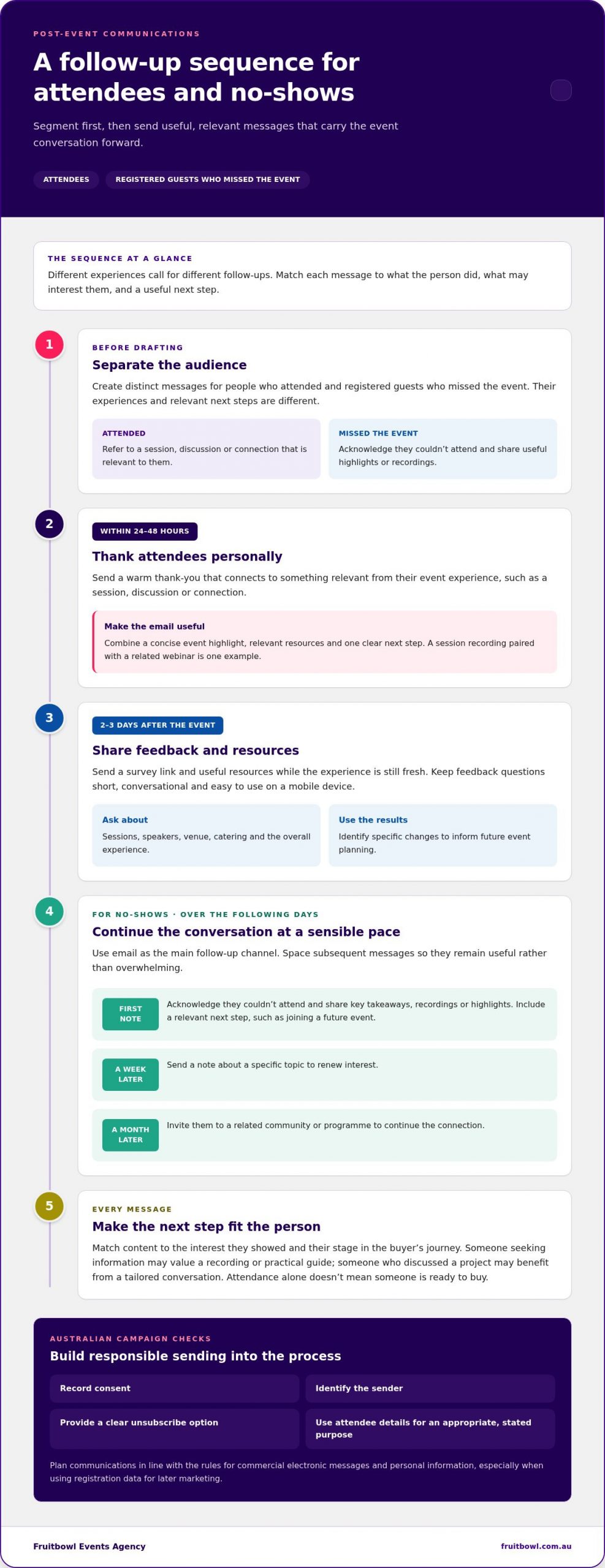
Segment your audience before drafting follow-up emails. Attendees and registered guests who missed the event need different messages, because their experiences and next steps differ. Send attendees a personalised thank-you within 24 to 48 hours after the event, referencing a session, discussion or connection relevant to them.
For Australian campaigns, plan communications in line with the rules for commercial electronic messages and personal information. Record consent, identify the sender, provide a clear unsubscribe option and use attendee details only for an appropriate, stated purpose. Build these checks into your campaign process, especially when using registration data for later marketing.
A useful follow-up email combines a warm thank-you, a concise event highlight, relevant resources and one clear call to action. For example, share a session recording and invite the recipient to explore a related webinar. Make the message useful rather than sending identical content to everyone. Referring to a booth visit or session attendance can make it more relevant.
Match the next step to the attendee’s stage in the buyer’s journey. Someone seeking information may value a recording or practical guide; someone who discussed a project may benefit from a tailored conversation. Don’t assume that attendance alone means every contact is ready to buy. Align the content and call to action with the interest they showed.
For no-shows, acknowledge that they couldn’t attend and share key takeaways, recordings or highlights. Use email as the main follow-up channel, with a relevant next step such as joining a future event. Space subsequent messages over the following days to keep communication useful rather than overwhelming. A week later, a note about a specific topic can renew interest; a month later, an invitation to a related community or programme can continue the connection.
Personalise messages with reliable details, such as registration choices or recorded session attendance, and keep each one focused. An exclusive resource or priority invitation can give recipients a clear reason to respond, as long as it matches their interests.
4. Post-event strategy and business outcomes
The most effective post-event engagement strategies tie follow-up to the event’s business goals. Combine audience-specific communications, useful content and outcome tracking, then give each audience segment a relevant next step.
Define success beyond attendance. For a conference, this could mean qualified conversations, webinar registrations or progress on agreed business opportunities. Choose measures before the event, then use registration data, platform activity and sales records to assess outcomes afterwards.
Attribution remains a challenge: in the Vendelux 2026 B2B Events Survey, 86% of teams said they couldn’t accurately attribute ROI to events. Connect event records with your customer relationship management platform, and log meaningful interactions, such as a session attended or a follow-up meeting booked. This creates a clearer view of how event participation relates to later outcomes, without treating every registration as a sale.
Use a practical review cycle. Hold the event team debrief within 24 to 72 hours, while delivery details remain clear. Compare the event survey with attendance, content engagement and business measures. Identify what to retain, change or investigate, then assign each action to an owner. For example, low interest in a session may prompt a different format or speaker brief next time.
Keep the core message active with well-spaced follow-ups: the day after the event, a week later and a month later. Each message should offer a useful next step, such as watching session videos, joining a related webinar or exploring a relevant programme. Nurture interest with content that reflects attendee actions, then review which channels prompted meaningful engagement.
For an upcoming event, define the desired outcomes, follow-up content and measurement plan during planning. Plan an event around measurable outcomes by aligning the experience and follow-up from the outset.
Fruitbowl Events Agency: Corporate Events
Fruitbowl Events Agency coordinates event planning, logistics and on-site delivery, and can help you consider follow-up outcomes alongside the event itself. Turn to the team when a corporate event needs a clear delivery plan that connects the attendee experience with the conversations and actions you want to continue afterwards.
Fruitbowl also manages Festivals & Public Events, Conferences & Seminars and Government Activations. For each format, the event’s purpose, audience and intended outcomes inform the planning approach. That foundation helps determine which content to share, how to gather feedback and what next steps will keep relevant conversations moving.
If you’re planning a corporate event and want to build post-event value in from the outset, contact Fruitbowl Events Agency to discuss your event.
Design the next event for what follows
An event can launch a longer programme rather than stand alone on the calendar. Build continuity into its purpose from the start by deciding which relationships, ideas or community outcomes should keep developing after attendees leave. This gives your team a clearer basis for shaping the experience and choosing which conversations to continue.
Thoughtful post-event engagement strategies help connect an event with your organisation’s wider priorities. Whether you’re planning Corporate Events, Conferences & Seminars or Festivals & Public Events, consider how the experience can lay a meaningful foundation for what comes next.
Fruitbowl Events Agency can help shape and deliver events with that broader perspective in mind. Start planning your next event with Fruitbowl Events Agency, and give its post-event potential a place in the plan from the beginning. Each event can open a considered path to the next conversation.
Frequently Asked Questions
What is post-event engagement?
Post-event engagement means continuing useful interactions after an event instead of ending communication when attendees leave. For example, a professional conference might share session resources, invite participants to discuss an idea with colleagues, then use their responses to shape a future programme. Effective follow-up has a clear purpose and relates to what attendees experienced or need next.
How can I personalise follow-up communication effectively?
Personalise messages using information attendees chose to share, such as registration interests, selected sessions or questions for speakers. Someone interested in sustainability could receive relevant session notes, while someone who asked about networking could get information about a related event. Focus each message on one useful action and leave out personal details that don’t help the recipient.
How do I measure the success of my follow-up strategy?
Measure outcomes against the event’s purpose, not email activity alone. A relationship-building event might track follow-up meetings and ongoing conversations; a learning programme could assess resource use and feedback on applying key ideas. Record a baseline before follow-up, then review the same measures afterwards. Comparing these signals helps distinguish meaningful progress from opens or clicks that don’t lead to action.
What’s the best time to send a follow-up email after an event?
Send a thank-you email within 24 to 48 hours after the event, while the experience remains recent for attendees. If the message’s main purpose is gathering considered feedback or sharing additional resources, schedule it separately rather than crowding everything into one email. For example, a brief acknowledgement can come first, followed by a survey and useful materials a few days later.
How soon should organisers follow up with event attendees?
Make the first follow-up promptly, then space later messages according to their purpose. A thank-you can arrive within 24 to 48 hours, while a survey and resources can follow 2–3 days after the event. A week later, share a relevant update or next step. This sequence keeps communication connected to the event without sending every message at once.
How can organisers collect and analyse post-event feedback?
Choose a feedback method suited to the event: email surveys for distributed audiences, venue iPads for in-person responses, or a feedback wall near the exit. Ask focused questions about specific elements, then group responses by topic, such as speakers, sessions or catering. Compare recurring comments with attendance and session feedback to identify practical changes for the next event, and assign an owner to each action.
OUR BLOG
Event Insights & Expertise
Our blog is your go-to resource for all things events. From expert insights and the latest industry trends to practical planning tips, we share everything you need to deliver standout experiences.
Contact Us