Planning an Annual Conference Series: A 2026 Guide

What if your next annual conference were not a standalone event, but the next purposeful chapter in a wider programme? Planning an annual conference series can build continuity, but it also raises a practical challenge: how do you stay aligned with organisational objectives without repeating last year’s agenda or losing the value attendees expect?

Each edition needs a clear reason to exist, while the series as a whole must build recognition, deliver measurable outcomes and justify the effort invested. A repeatable approach can create consistency in strategy, logistics and delivery without forcing every event into the same format.

This 2026 guide explains how to set objectives for the series, give each conference its own purpose and establish a planning system that carries lessons from one edition to the next. It covers strategic planning, logistics, production and post-event evaluation, with practical ways to connect intent with execution and track progress over time.

Key Takeaways

  • Start planning an annual conference series with a charter that defines its purpose, audience, decision-makers, scope and success measures.
  • Separate enduring series-wide standards from edition-specific themes, speakers and content choices.
  • Use a structured planning sequence to move each conference from audience research and brief approval through delivery and review.
  • Track budget categories and contingencies early so financial decisions support the programme’s priorities.
  • Bring strategy, logistics, stakeholder coordination and production together in one plan when internal capacity needs support.

What does planning an annual conference series involve?

Planning an annual conference series means connecting each edition to a shared purpose, clear governance and learning that carries forward. Unlike a standalone conference, each edition contributes to longer-term organisational objectives and is shaped by what previous events have taught the team.

This approach can suit organisations that need an ongoing forum for stakeholder engagement, professional learning or discussion of evolving priorities. Each conference still needs a distinct reason to gather. The series provides continuity; the edition gives attendees timely content and a relevant experience.

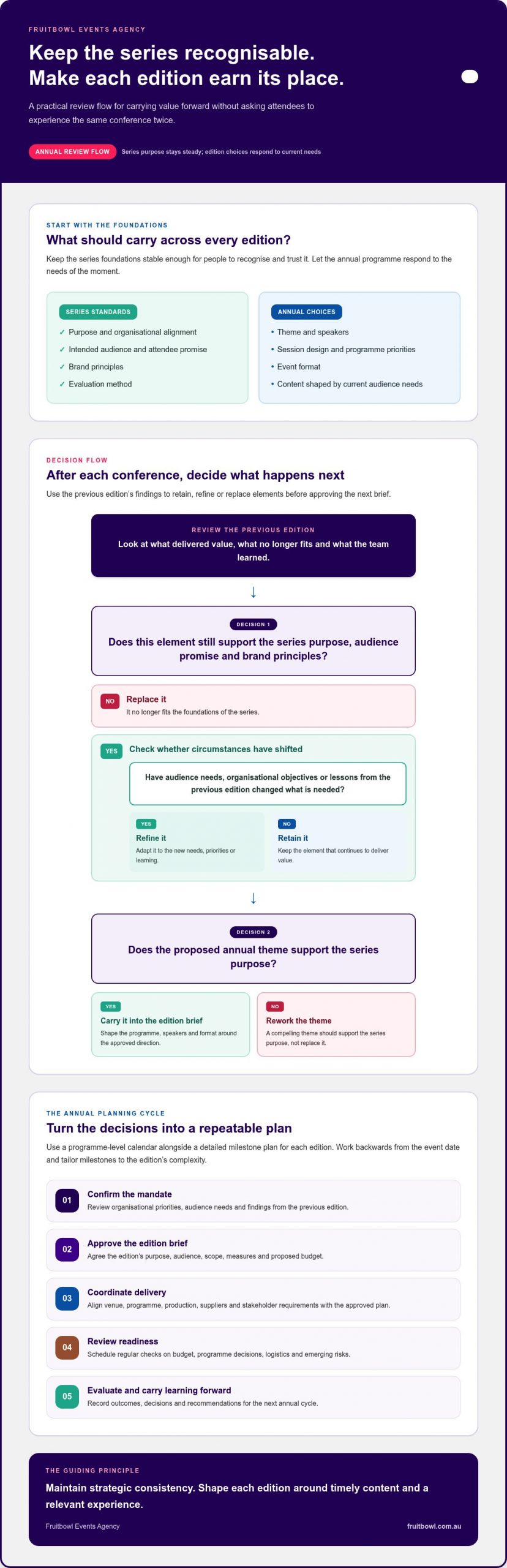
Plan at two levels. Series-level decisions establish the purpose, audience promise, brand principles, decision-making structure and evaluation approach. Edition-level decisions respond to current needs, including the annual theme, speakers, programme and format. These choices are connected, but they aren’t interchangeable: a compelling theme should support the series purpose, not replace it. Event management spans budgeting, scheduling and logistics coordination, all of which need to work within this broader programme structure.

What should an annual conference series achieve?

Start with organisational objectives, audience needs and the outcomes the programme should support over time. Then distinguish series measures from individual event targets. Attendance can show the reach of one edition, but it won’t, on its own, demonstrate whether the series is improving knowledge, strengthening stakeholder relationships or advancing an organisational priority. For each intended outcome, define what evidence will indicate progress, who benefits, who approves key decisions and who needs to be consulted.

Clear roles reduce uncertainty as the programme develops. For example, a governance group might set the series direction and approve success measures, while an edition team shapes the agenda and coordinates delivery within that framework.

What stays consistent and what can change each year?

Keep the foundations stable enough for people to recognise and trust the series, while allowing each edition to address current needs. Record:

  • Ongoing standards: purpose, intended audience, attendee promise, brand principles and evaluation method.
  • Annual choices: theme, speakers, session design, programme priorities and event format.
  • Review triggers: shifts in audience needs, organisational objectives or lessons from the previous edition.

After each conference, review what delivered value and what no longer fits. Use the findings to retain, refine or replace elements before approving the next brief. This is the practical discipline at the heart of planning an annual conference series: maintain strategic consistency without asking attendees to experience the same event twice.

How to build the strategy and governance for a conference series

A clear strategy turns the series purpose into decisions people can act on. Establish the direction once, then give each edition a planning cycle suited to its audience, scope and delivery requirements. This keeps the programme connected without requiring every year to follow an identical template.

How do you set objectives, ownership and decision rights?

Use a short series charter to record the mandate, audience, scope, decision-makers and measures of success. A series charter is the shared reference point that keeps conference decisions aligned with organisational priorities across every edition. Translate those priorities into a small set of outcomes for the programme, such as strengthening stakeholder engagement or supporting professional learning. For each outcome, decide how progress will be assessed and when the team will review it.

Make accountability explicit. Name an accountable sponsor, the people authorised to make strategic decisions, the delivery leads responsible for execution and the stakeholders who contribute specialist or audience insight. Document who approves the budget and scope, who signs off the programme, and how significant changes or risks are escalated. Clear decision rights help the team resolve issues without reopening the series mandate each year.

How should the annual planning cycle work?

Planning an annual conference series works best with two connected schedules: a high-level calendar for the programme and a detailed milestone plan for each edition. Work backwards from the event date, setting approval points for the brief, budget, venue, programme, production and stakeholder readiness. The Conference planning checklist from the University of Michigan offers a long-range reference, with planning activities beginning well ahead of event delivery.

  1. Confirm the mandate: review organisational priorities, audience needs and the previous edition’s findings.
  2. Approve the edition brief: agree its purpose, audience, scope, measures and proposed budget.
  3. Coordinate delivery: align venue, programme, production, suppliers and stakeholder requirements against the approved plan.
  4. Review readiness: schedule regular checks on budget, programme decisions, logistics and emerging risks.
  5. Evaluate and carry learning forward: record outcomes, decisions and recommendations for the next annual cycle.

Keep the programme calendar consistent, but tailor detailed milestones to each edition’s complexity. A conference logistics coordination plan can connect delivery tasks with approvals and stakeholder responsibilities, helping the team see how decisions affect one another. Fruitbowl Events Agency brings strategic planning, logistics coordination, production and on-site delivery together for conferences and seminars across Australia, drawing on over 28 years of event industry experience.

How to balance consistency, fresh content and annual value

Consistency should help attendees recognise the series, not predict every session. Keep the experience anchored to its purpose and standards, then renew the programme in response to what the audience and organisation need from the next edition. Repeatable systems make planning more controlled while leaving room for new ideas and formats.

A conference series preserves its promise by keeping its standards steady while renewing its programme to meet the needs of each year. When assessing a proposed change, ask whether it will make the edition more relevant while still supporting the series purpose.

Series standards Annual choices What may trigger a change
Audience promise, core objectives, quality standards and recognisable identity Theme, speakers, session formats and engagement approaches New audience needs, changing organisational priorities or lessons from evaluation
Registration, stakeholder communication and feedback principles Programme sequence, event format and participation options Barriers to participation, delivery complexity or available resources
Consistent evaluation measures that support comparison between editions Additional questions or measures for a particular theme A shift in intended outcomes that warrants revised measures

Which parts of the conference should remain consistent?

Maintain the elements that build trust and make year-on-year learning possible. A familiar registration process, clear stakeholder communications and a consistent approach to feedback help attendees understand what to expect, while giving the team a steadier basis for comparing results. Consistency doesn’t mean refusing to adapt. If an exception is justified, record why it was made and how it supports the series purpose, so a one-off change doesn’t quietly become a new standard.

How can each edition feel relevant and distinct?

Use audience feedback and current organisational priorities to shape the theme and content. Refresh speakers, sessions and participation options when they improve relevance, not simply for novelty. Then assess the format against audience needs and delivery requirements:

  • In-person: consider whether direct participation best supports the objectives and whether venue and production requirements are manageable.
  • Hybrid: assess how in-room and remote participation can be supported equitably, including the additional coordination and production involved.
  • Virtual: consider whether online participation suits the content, audience access needs and intended interaction.

Planning an annual conference series means weighing these choices against objectives, accessibility, operational complexity and available resources. Review the decision after each edition. If a format or programme change improves audience value without weakening the series identity, carry the learning forward. If it adds complexity without a clear benefit, refine the approach.
Planning an Annual Conference Series: A 2026 Guide

How to plan, deliver and evaluate each annual conference edition

Once the edition brief is approved, turn it into a working delivery plan that connects programme decisions with operational tasks. Planning an annual conference series becomes more manageable when each edition follows a clear sequence, with the objectives and audience needs guiding the detail.

What belongs in the edition-level delivery plan?

Start with audience research and a confirmed brief. Then coordinate the programme, venue, production, registration, speakers, suppliers and attendee communications against one schedule. A practical conference logistics checklist can help organise these moving parts. The plan should also show who owns each task, when it’s due, what it depends on and which approvals are required.

  • Budget: group forecast and actual spending by categories such as venue, catering, production, speakers, travel and communications. Record assumptions, approval limits and contingency actions.
  • Stakeholder communications: set out who needs updates, what decisions or information they need, and when communications will be issued.
  • Accessibility and safety: consider attendee access needs, venue arrangements, participation formats and event-specific risks during planning, not as last-minute checks.
  • Requirements: identify the applicable jurisdictional and other requirements for the event’s specific circumstances, and assign responsibility for addressing them.

Keep dependencies visible. A programme change, for example, may affect speaker arrangements, production requirements, attendee communications and the budget. A single working plan helps the team assess that impact before approving the change. Review readiness at agreed milestones, and maintain clear escalation and contingency actions for identified risks.

How do you measure results and improve the next edition?

Decide how success will be measured before the event takes place. Match each measure to an agreed objective rather than collecting information without a clear use. Depending on the purpose, relevant evidence might include attendance, session engagement, attendee feedback, budget performance and stakeholder observations. Use consistent measures across editions where comparison matters, and add edition-specific questions when the programme has a distinct focus.

After delivery, hold a structured debrief while details are still clear. Compare results with the brief, record what worked and where delivery diverged from plan, then assign each follow-up action an owner and a place in the next planning cycle. This turns evaluation into a practical input, not simply a closing report.

Fruitbowl Events Agency integrates conference strategy, logistics, budget coordination, production and on-site delivery, drawing on over 28 years of event industry experience. Conference planning with Fruitbowl connects delivery detail with the outcomes your series is designed to achieve.

When to bring in an event partner for an annual conference series

An event partner can add value when the series grows beyond the capacity of the internal team, when delivery involves many interconnected workstreams, or when the organisation needs a clearer link between strategic intent and execution. The need may be especially clear if planning knowledge is held by a small number of people, operational demands compete with other responsibilities, or lessons from one edition aren’t being carried into the next.

For planning an annual conference series, support should do more than fill short-term resourcing gaps. It should help maintain continuity across editions by connecting objectives, budget oversight, stakeholders, logistics and production in a coordinated plan.

What can an end-to-end conference partner coordinate?

Conference and seminar planning brings strategic and operational responsibilities into one view. This can include developing the event approach, managing the budget, sourcing a venue and liaising with stakeholders, then coordinating the programme, technical production and on-site delivery. Clear responsibilities matter throughout: they show who owns decisions, who completes tasks and how information moves from planning into delivery and post-event review.

That integrated approach can help an internal team retain oversight of the series purpose while event specialists coordinate practical details. Fruitbowl Events Agency provides end-to-end conference and seminar planning across Australia, drawing on over 28 years of event industry experience. Strategic planning, logistics coordination, budget management, production and delivery can be aligned under one plan, tailored to the event’s objectives and requirements.

How to move from a series brief to a delivery plan

Before planning begins, bring the essential decisions into a concise brief. Set out:

  • Purpose and audience: why the series exists and who it needs to serve.
  • Objectives: the outcomes the programme and first edition are intended to support.
  • Scope and constraints: what the edition needs to include, alongside known budget, timing or operational parameters.
  • Governance: who makes decisions, approves changes and contributes to delivery.
  • Continuity: what the first edition must establish and what future editions can build upon.

With this foundation, the delivery plan can translate intent into assigned responsibilities, timelines, coordination points and review measures. It also gives the team a useful reference when priorities shift, helping decisions stay connected to the programme rather than being made in isolation.

For a concise starting point, explore conference series planning with Fruitbowl.

Build a conference programme that grows with purpose

Planning an annual conference series is an ongoing commitment to clear objectives, thoughtful governance and learning between editions. A defined series purpose keeps decisions aligned, while a flexible programme lets each conference respond to current audience needs. Consistent evaluation then gives the team practical insight to shape what comes next.

Fruitbowl Events Agency brings over 28 years of event industry experience to conference planning, with end-to-end coordination and on-site delivery for organisations across Australia. Strategic planning, logistics, budget management, stakeholder liaison and production can be connected under one plan, supporting continuity from the first brief through to post-event review.

Plan your next conference series with Fruitbowl to connect the programme with a clear purpose for every edition. With the right structure in place, your series can stay consistent where it matters and keep delivering fresh value.

Frequently Asked Questions

How far in advance should you plan an annual conference series?

Set the series purpose and governance well before planning the first edition, then work backwards from each event date. For a 200-person conference, allow 12 to 18 months for planning; sponsorship sales should ideally open 6 to 9 months before the event. These timeframes give teams room to approve the brief, coordinate stakeholders, secure key arrangements and manage dependencies. Build future review and planning milestones into the calendar as well.

How do you keep an annual conference series from becoming repetitive?

Keep the series purpose and audience promise steady, but refresh the content in response to current audience needs and organisational priorities. Research what attendees want to learn, then shape each edition’s theme, speakers, session formats and participation opportunities accordingly. Review feedback and results after every event. This helps distinguish meaningful improvements from changes made simply for novelty, and gives each edition a clear reason to stand apart.

What should stay consistent across an annual conference series?

Keep the elements that make the programme recognisable and allow progress to be assessed over time. These usually include its purpose, intended audience, core objectives, brand principles, quality standards and approach to evaluation. Consistency in registration, stakeholder communications and feedback processes can also make editions easier to compare. Document any exceptions and explain why they’re needed, so a change supports the series rather than gradually shifting it off course.

How do you measure the success of a conference series?

Set measures before delivery and connect each one to an agreed series or edition objective. Attendance can indicate reach, while session engagement, attendee feedback and stakeholder observations can help assess relevance and participation. Track budget performance against the approved plan, too. No single measure tells the whole story, so review evidence together after each edition, record what it shows and use the findings to guide decisions for the next conference.

Can an annual conference series include different event formats?

Yes. A series can use in-person, hybrid or virtual formats across different editions, provided each choice supports the audience and objectives. Consider how participants will access and engage with the programme, as well as the production, venue and coordination requirements involved. A change in format should have a clear rationale, such as responding to participation needs or delivery constraints. Review its effectiveness afterwards and carry useful lessons into future planning.

What is the difference between planning one conference and a conference series?

Planning one conference centres on delivering a single event to meet its objectives. Planning an annual conference series also requires decisions about shared purpose, governance, audience promise and how results will inform future editions. Each conference needs its own brief and delivery plan, but it sits within a longer programme. That structure supports continuity while allowing themes, speakers and formats to evolve in response to changing needs.

What if your next annual conference were not a standalone event, but the next purposeful chapter in a wider programme? Planning an annual conference series can build continuity, but it also raises a practical challenge: how do you stay aligned with organisational objectives without repeating last year’s agenda or losing the value attendees expect?

Each edition needs a clear reason to exist, while the series as a whole must build recognition, deliver measurable outcomes and justify the effort invested. A repeatable approach can create consistency in strategy, logistics and delivery without forcing every event into the same format.

This 2026 guide explains how to set objectives for the series, give each conference its own purpose and establish a planning system that carries lessons from one edition to the next. It covers strategic planning, logistics, production and post-event evaluation, with practical ways to connect intent with execution and track progress over time.

Key Takeaways

  • Start planning an annual conference series with a charter that defines its purpose, audience, decision-makers, scope and success measures.
  • Separate enduring series-wide standards from edition-specific themes, speakers and content choices.
  • Use a structured planning sequence to move each conference from audience research and brief approval through delivery and review.
  • Track budget categories and contingencies early so financial decisions support the programme’s priorities.
  • Bring strategy, logistics, stakeholder coordination and production together in one plan when internal capacity needs support.

What does planning an annual conference series involve?

Planning an annual conference series means connecting each edition to a shared purpose, clear governance and learning that carries forward. Unlike a standalone conference, each edition contributes to longer-term organisational objectives and is shaped by what previous events have taught the team.

This approach can suit organisations that need an ongoing forum for stakeholder engagement, professional learning or discussion of evolving priorities. Each conference still needs a distinct reason to gather. The series provides continuity; the edition gives attendees timely content and a relevant experience.

Plan at two levels. Series-level decisions establish the purpose, audience promise, brand principles, decision-making structure and evaluation approach. Edition-level decisions respond to current needs, including the annual theme, speakers, programme and format. These choices are connected, but they aren’t interchangeable: a compelling theme should support the series purpose, not replace it. Event management spans budgeting, scheduling and logistics coordination, all of which need to work within this broader programme structure.

What should an annual conference series achieve?

Start with organisational objectives, audience needs and the outcomes the programme should support over time. Then distinguish series measures from individual event targets. Attendance can show the reach of one edition, but it won’t, on its own, demonstrate whether the series is improving knowledge, strengthening stakeholder relationships or advancing an organisational priority. For each intended outcome, define what evidence will indicate progress, who benefits, who approves key decisions and who needs to be consulted.

Clear roles reduce uncertainty as the programme develops. For example, a governance group might set the series direction and approve success measures, while an edition team shapes the agenda and coordinates delivery within that framework.

What stays consistent and what can change each year?

Keep the foundations stable enough for people to recognise and trust the series, while allowing each edition to address current needs. Record:

  • Ongoing standards: purpose, intended audience, attendee promise, brand principles and evaluation method.
  • Annual choices: theme, speakers, session design, programme priorities and event format.
  • Review triggers: shifts in audience needs, organisational objectives or lessons from the previous edition.

After each conference, review what delivered value and what no longer fits. Use the findings to retain, refine or replace elements before approving the next brief. This is the practical discipline at the heart of planning an annual conference series: maintain strategic consistency without asking attendees to experience the same event twice.

How to build the strategy and governance for a conference series

A clear strategy turns the series purpose into decisions people can act on. Establish the direction once, then give each edition a planning cycle suited to its audience, scope and delivery requirements. This keeps the programme connected without requiring every year to follow an identical template.

How do you set objectives, ownership and decision rights?

Use a short series charter to record the mandate, audience, scope, decision-makers and measures of success. A series charter is the shared reference point that keeps conference decisions aligned with organisational priorities across every edition. Translate those priorities into a small set of outcomes for the programme, such as strengthening stakeholder engagement or supporting professional learning. For each outcome, decide how progress will be assessed and when the team will review it.

Make accountability explicit. Name an accountable sponsor, the people authorised to make strategic decisions, the delivery leads responsible for execution and the stakeholders who contribute specialist or audience insight. Document who approves the budget and scope, who signs off the programme, and how significant changes or risks are escalated. Clear decision rights help the team resolve issues without reopening the series mandate each year.

How should the annual planning cycle work?

Planning an annual conference series works best with two connected schedules: a high-level calendar for the programme and a detailed milestone plan for each edition. Work backwards from the event date, setting approval points for the brief, budget, venue, programme, production and stakeholder readiness. The Conference planning checklist from the University of Michigan offers a long-range reference, with planning activities beginning well ahead of event delivery.

  1. Confirm the mandate: review organisational priorities, audience needs and the previous edition’s findings.
  2. Approve the edition brief: agree its purpose, audience, scope, measures and proposed budget.
  3. Coordinate delivery: align venue, programme, production, suppliers and stakeholder requirements against the approved plan.
  4. Review readiness: schedule regular checks on budget, programme decisions, logistics and emerging risks.
  5. Evaluate and carry learning forward: record outcomes, decisions and recommendations for the next annual cycle.

Keep the programme calendar consistent, but tailor detailed milestones to each edition’s complexity. A conference logistics coordination plan can connect delivery tasks with approvals and stakeholder responsibilities, helping the team see how decisions affect one another. Fruitbowl Events Agency brings strategic planning, logistics coordination, production and on-site delivery together for conferences and seminars across Australia, drawing on over 28 years of event industry experience.

How to balance consistency, fresh content and annual value

Consistency should help attendees recognise the series, not predict every session. Keep the experience anchored to its purpose and standards, then renew the programme in response to what the audience and organisation need from the next edition. Repeatable systems make planning more controlled while leaving room for new ideas and formats.

A conference series preserves its promise by keeping its standards steady while renewing its programme to meet the needs of each year. When assessing a proposed change, ask whether it will make the edition more relevant while still supporting the series purpose.

Series standards Annual choices What may trigger a change
Audience promise, core objectives, quality standards and recognisable identity Theme, speakers, session formats and engagement approaches New audience needs, changing organisational priorities or lessons from evaluation
Registration, stakeholder communication and feedback principles Programme sequence, event format and participation options Barriers to participation, delivery complexity or available resources
Consistent evaluation measures that support comparison between editions Additional questions or measures for a particular theme A shift in intended outcomes that warrants revised measures

Which parts of the conference should remain consistent?

Maintain the elements that build trust and make year-on-year learning possible. A familiar registration process, clear stakeholder communications and a consistent approach to feedback help attendees understand what to expect, while giving the team a steadier basis for comparing results. Consistency doesn’t mean refusing to adapt. If an exception is justified, record why it was made and how it supports the series purpose, so a one-off change doesn’t quietly become a new standard.

How can each edition feel relevant and distinct?

Use audience feedback and current organisational priorities to shape the theme and content. Refresh speakers, sessions and participation options when they improve relevance, not simply for novelty. Then assess the format against audience needs and delivery requirements:

  • In-person: consider whether direct participation best supports the objectives and whether venue and production requirements are manageable.
  • Hybrid: assess how in-room and remote participation can be supported equitably, including the additional coordination and production involved.
  • Virtual: consider whether online participation suits the content, audience access needs and intended interaction.

Planning an annual conference series means weighing these choices against objectives, accessibility, operational complexity and available resources. Review the decision after each edition. If a format or programme change improves audience value without weakening the series identity, carry the learning forward. If it adds complexity without a clear benefit, refine the approach.

How to plan, deliver and evaluate each annual conference edition

Once the edition brief is approved, turn it into a working delivery plan that connects programme decisions with operational tasks. Planning an annual conference series becomes more manageable when each edition follows a clear sequence, with the objectives and audience needs guiding the detail.

What belongs in the edition-level delivery plan?

Start with audience research and a confirmed brief. Then coordinate the programme, venue, production, registration, speakers, suppliers and attendee communications against one schedule. A practical conference logistics checklist can help organise these moving parts. The plan should also show who owns each task, when it’s due, what it depends on and which approvals are required.

  • Budget: group forecast and actual spending by categories such as venue, catering, production, speakers, travel and communications. Record assumptions, approval limits and contingency actions.
  • Stakeholder communications: set out who needs updates, what decisions or information they need, and when communications will be issued.
  • Accessibility and safety: consider attendee access needs, venue arrangements, participation formats and event-specific risks during planning, not as last-minute checks.
  • Requirements: identify the applicable jurisdictional and other requirements for the event’s specific circumstances, and assign responsibility for addressing them.

Keep dependencies visible. A programme change, for example, may affect speaker arrangements, production requirements, attendee communications and the budget. A single working plan helps the team assess that impact before approving the change. Review readiness at agreed milestones, and maintain clear escalation and contingency actions for identified risks.

How do you measure results and improve the next edition?

Decide how success will be measured before the event takes place. Match each measure to an agreed objective rather than collecting information without a clear use. Depending on the purpose, relevant evidence might include attendance, session engagement, attendee feedback, budget performance and stakeholder observations. Use consistent measures across editions where comparison matters, and add edition-specific questions when the programme has a distinct focus.

After delivery, hold a structured debrief while details are still clear. Compare results with the brief, record what worked and where delivery diverged from plan, then assign each follow-up action an owner and a place in the next planning cycle. This turns evaluation into a practical input, not simply a closing report.

Fruitbowl Events Agency integrates conference strategy, logistics, budget coordination, production and on-site delivery, drawing on over 28 years of event industry experience. Conference planning with Fruitbowl connects delivery detail with the outcomes your series is designed to achieve.

When to bring in an event partner for an annual conference series

An event partner can add value when the series grows beyond the capacity of the internal team, when delivery involves many interconnected workstreams, or when the organisation needs a clearer link between strategic intent and execution. The need may be especially clear if planning knowledge is held by a small number of people, operational demands compete with other responsibilities, or lessons from one edition aren’t being carried into the next.

For planning an annual conference series, support should do more than fill short-term resourcing gaps. It should help maintain continuity across editions by connecting objectives, budget oversight, stakeholders, logistics and production in a coordinated plan.

What can an end-to-end conference partner coordinate?

Conference and seminar planning brings strategic and operational responsibilities into one view. This can include developing the event approach, managing the budget, sourcing a venue and liaising with stakeholders, then coordinating the programme, technical production and on-site delivery. Clear responsibilities matter throughout: they show who owns decisions, who completes tasks and how information moves from planning into delivery and post-event review.

That integrated approach can help an internal team retain oversight of the series purpose while event specialists coordinate practical details. Fruitbowl Events Agency provides end-to-end conference and seminar planning across Australia, drawing on over 28 years of event industry experience. Strategic planning, logistics coordination, budget management, production and delivery can be aligned under one plan, tailored to the event’s objectives and requirements.

How to move from a series brief to a delivery plan

Before planning begins, bring the essential decisions into a concise brief. Set out:

  • Purpose and audience: why the series exists and who it needs to serve.
  • Objectives: the outcomes the programme and first edition are intended to support.
  • Scope and constraints: what the edition needs to include, alongside known budget, timing or operational parameters.
  • Governance: who makes decisions, approves changes and contributes to delivery.
  • Continuity: what the first edition must establish and what future editions can build upon.

With this foundation, the delivery plan can translate intent into assigned responsibilities, timelines, coordination points and review measures. It also gives the team a useful reference when priorities shift, helping decisions stay connected to the programme rather than being made in isolation.

For a concise starting point, explore conference series planning with Fruitbowl.

Build a conference programme that grows with purpose

Planning an annual conference series is an ongoing commitment to clear objectives, thoughtful governance and learning between editions. A defined series purpose keeps decisions aligned, while a flexible programme lets each conference respond to current audience needs. Consistent evaluation then gives the team practical insight to shape what comes next.

Fruitbowl Events Agency brings over 28 years of event industry experience to conference planning, with end-to-end coordination and on-site delivery for organisations across Australia. Strategic planning, logistics, budget management, stakeholder liaison and production can be connected under one plan, supporting continuity from the first brief through to post-event review.

Plan your next conference series with Fruitbowl to connect the programme with a clear purpose for every edition. With the right structure in place, your series can stay consistent where it matters and keep delivering fresh value.

Frequently Asked Questions

How far in advance should you plan an annual conference series?

Set the series purpose and governance well before planning the first edition, then work backwards from each event date. For a 200-person conference, allow 12 to 18 months for planning; sponsorship sales should ideally open 6 to 9 months before the event. These timeframes give teams room to approve the brief, coordinate stakeholders, secure key arrangements and manage dependencies. Build future review and planning milestones into the calendar as well.

How do you keep an annual conference series from becoming repetitive?

Keep the series purpose and audience promise steady, but refresh the content in response to current audience needs and organisational priorities. Research what attendees want to learn, then shape each edition’s theme, speakers, session formats and participation opportunities accordingly. Review feedback and results after every event. This helps distinguish meaningful improvements from changes made simply for novelty, and gives each edition a clear reason to stand apart.

What should stay consistent across an annual conference series?

Keep the elements that make the programme recognisable and allow progress to be assessed over time. These usually include its purpose, intended audience, core objectives, brand principles, quality standards and approach to evaluation. Consistency in registration, stakeholder communications and feedback processes can also make editions easier to compare. Document any exceptions and explain why they’re needed, so a change supports the series rather than gradually shifting it off course.

How do you measure the success of a conference series?

Set measures before delivery and connect each one to an agreed series or edition objective. Attendance can indicate reach, while session engagement, attendee feedback and stakeholder observations can help assess relevance and participation. Track budget performance against the approved plan, too. No single measure tells the whole story, so review evidence together after each edition, record what it shows and use the findings to guide decisions for the next conference.

Can an annual conference series include different event formats?

Yes. A series can use in-person, hybrid or virtual formats across different editions, provided each choice supports the audience and objectives. Consider how participants will access and engage with the programme, as well as the production, venue and coordination requirements involved. A change in format should have a clear rationale, such as responding to participation needs or delivery constraints. Review its effectiveness afterwards and carry useful lessons into future planning.

What is the difference between planning one conference and a conference series?

Planning one conference centres on delivering a single event to meet its objectives. Planning an annual conference series also requires decisions about shared purpose, governance, audience promise and how results will inform future editions. Each conference needs its own brief and delivery plan, but it sits within a longer programme. That structure supports continuity while allowing themes, speakers and formats to evolve in response to changing needs.

Back to Articles
Request A Quote

Make an
Enquiry

Untitled design

What Makes Us Different?

True end-to-end solution so you can hand off to us, focus on your priorities and enjoy the event without any stress

Unmatched industry expertise looking after diverse range of high-profile events, cultural festivals & activations

Meticulous attention to every detail and precise execution of events with our streamlined processes

Tailored solutions with bespoke strategies to ensure we align with your brand and objectives

Make an Enquiry

"*" indicates required fields

This field is for validation purposes and should be left unchanged.

"*" indicates required fields

This field is for validation purposes and should be left unchanged.