A corporate session should do more than fill a gap in the programme. The most effective interactive sessions for corporate events help people explore ideas and behaviours that matter to their organisation through practical formats such as workshops, breakout groups, team challenges and facilitated discussions.
It’s possible to make an event engaging without losing sight of its purpose. The activity itself is only part of the picture: the format, facilitation and connection to company values all influence whether participants can contribute meaningfully and carry ideas into their work.
This article explains how to choose and structure workshops, games and collaborative sessions around your team’s objectives. It also covers how facilitation, session flow and conference themes can bring these elements together to create an experience that feels relevant, inclusive and considered.
Key Takeaways
- Match each activity to a clear team objective, so participation supports a practical outcome rather than serving as entertainment alone.
- Use skilled facilitation to guide discussion, make participation easier and keep sessions moving with purpose.
- Give breakout groups a focused task and a defined way to share their thinking with the wider audience.
- Shape session themes and activities around company values to make the event feel relevant to the people taking part.
- Plan the programme as a connected experience, balancing active sessions with time for reflection and informal conversation.
Interactive workshops and skill-building sessions
Hands-on workshops, team challenges and guided discussions let employees practise skills, not just hear about them. Choose a format that serves a clear objective, such as improving collaboration, encouraging creative thinking or strengthening working relationships.
Effective team-building activities for corporate events bring people together around a shared task, such as a cooking challenge, problem-solving game or community service day. Choose an activity based on the team’s objective, the venue and the ways participants can contribute.
On-site team-building experiences
On-site activities bring team building to a chosen venue, such as a conference space, workplace or outdoor location. Match the activity to the setting: a strategy challenge may suit a meeting room, while a larger open space can accommodate movement-based tasks. When planning, consider access, layout and equipment needs.
For charity team building, organise a shared activity that contributes time to a charitable cause. A practical programme could divide participants into teams, assign a task and finish with a short reflection on cooperation. Tailor the challenge, facilitation and session flow to reflect the team’s goals.
Cooking team-building challenges
A cooking challenge gives each team a shared goal: prepare a dish from scratch. Surprise ingredients add a problem-solving element as teams divide tasks, manage time and present their food. Professional chefs or culinary experts can judge the dishes, giving participants a clear finish point.
Use the challenge to practise communication and creative decision-making, not just cooking. Assign roles for planning, preparation and presentation, for example, then ask each group to explain its choices. Consider the venue’s kitchen facilities, dietary needs and food-handling arrangements when designing the activity.
Activity fit, group size and duration
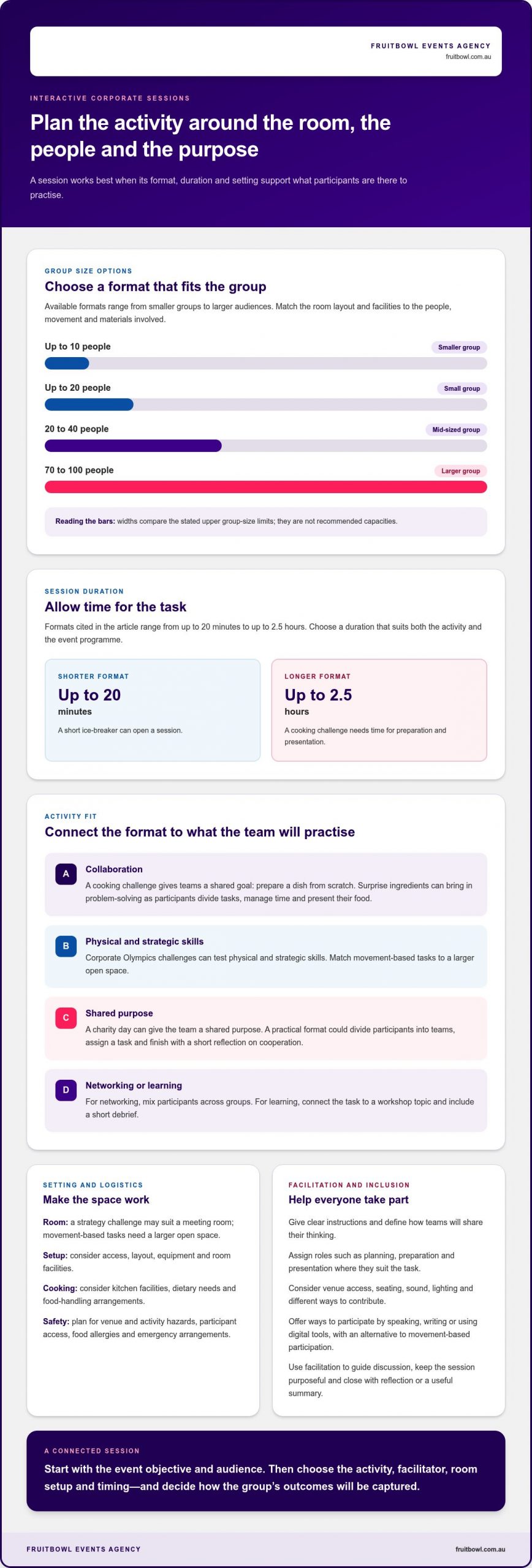
Choose an activity based on the skills you want to practise. Cooking can encourage collaboration; Corporate Olympics challenges can test physical and strategic skills; and a charity day can give the team a shared purpose. To support networking, mix participants across groups. For learning, connect the task to a workshop topic and include a short debrief.
What are the risks and safety requirements for interactive corporate events in Australia? Consider hazards related to the venue and activity, participant access, food allergies and emergency arrangements, then plan suitable controls before the session. Choose a format that makes participation practical and safe for those attending.
How long should an interactive session at a corporate event run? Activity formats in the market range from up to 20 minutes to up to 2.5 hours, so match duration to the task and programme. A short ice-breaker can open a session; a cooking challenge needs time for preparation and presentation.
What group sizes and venues suit different corporate activities? Available formats include options for up to 10, up to 20, 20 to 40, and 70 to 100 people. Match the venue’s layout and facilities to the group, allowing space for teams, movement and any activity materials.
Event facilitation and planning support
Facilitation turns an activity into a structured part of the event, with clear instructions, purposeful participation and a useful close. Planning connects the session to the wider programme, including the event objective, room layout and timing.
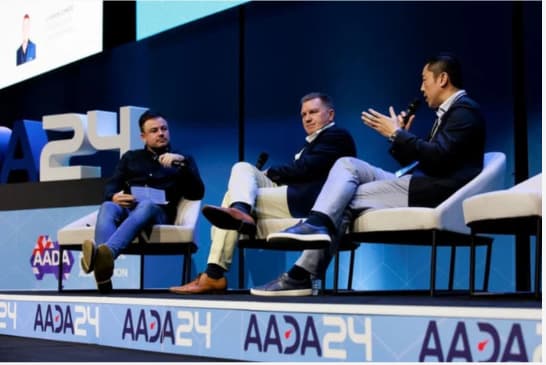
A facilitator can open a panel by explaining how attendees can participate, then guide questions and draw out practical points. Slido or Mentimeter can collect audience questions and feedback in real time. A host can also guide networking through structured activities that help attendees meet people beyond their immediate colleagues.
In expert-led table discussions, attendees rotate between topic tables while experts guide conversations and answer questions. Set a topic for each table, explain the rotation and provide a way to capture useful observations. A short summary at the end can connect separate discussions to the event’s central theme.
Well-timed breaks give attendees space to absorb learning and network informally. Build them into the running order alongside presentations, interactive sessions and transitions between rooms. For example, a conference programme could move from a speaker’s presentation to facilitated table discussions, then allow time for informal conversations before the next session.
What accessibility and inclusion considerations apply to corporate event activities? Consider venue access, seating, sound, lighting and different ways participants can contribute, including speaking, writing or using digital tools. Clear instructions and an alternative to movement-based participation can help make an activity accessible to a varied audience.
Start planning with the event objective and audience. Identify what participants should learn, discuss or practise, then choose a suitable format and facilitator. Map the session into the event schedule, assign responsibility for materials and technology, and prepare clear instructions for attendees.
How do you book and plan an interactive session for a corporate event? Define the objective, audience, venue and preferred format, then build the session around those requirements. A booking plan should cover the running order, room setup, facilitation, audience participation and how outcomes will be captured.
Coordination also means making the session work within the wider event. Check that the room suits the chosen layout, attendees can use any polling platform, and the facilitator knows the schedule and handover points. These details help the activity serve its purpose without disrupting the programme.
For a workplace gathering or conference, tailored planning can connect facilitation with the event’s theme and audience needs. Corporate event planning can bring session design and programme coordination into one considered plan.
Guided networking can use a host or facilitator to help attendees participate and meet a range of people. Structured activities such as speed networking and networking games can make it more engaging and less awkward.
Guided networking can help introverted attendees and people who are new to an industry take part. An inspirational speaker event can include interactive Q&A sessions, giving employees a chance to engage directly with speakers.
Interactive game shows and trivia
Game shows and trivia give corporate gatherings a clear structure for participation, friendly competition and shared entertainment. Strong formats connect questions, music or team play with the event’s audience and culture.
Interactive game shows
A game-show format can use rounds, team answers and a host to keep participants involved. Decide whether to focus on general knowledge, workplace themes or collaboration, then explain the rules before play begins. A visible score helps teams follow progress, while a modest reward can recognise participation without making competition the event’s main focus.
For a corporate audience, questions can draw on shared experiences, company milestones or broad topics that don’t require specialist knowledge. A round about memorable workplace moments, for example, can prompt conversation across teams. Keep questions clear and inclusive, avoiding inside knowledge that could leave newer employees out.
That Bingo Party is a 3-hour bingo and trivia event with two costumed hosts and multimedia nostalgia. Its combination of formats offers a concrete example of how hosts, questions and familiar references can create a more structured game-show experience.
To shape a session, first set the tone: light entertainment, team collaboration or a more competitive challenge. Choose the rounds and explain how answers count. A host can introduce each round, clarify the rules and keep transitions moving, so participants can focus on the game rather than figuring out what happens next.
Music trivia and bingo
Music trivia can ask teams to identify a song, artist or era from a short clip, while bingo offers a familiar, simple way to play. Choose music that suits the audience and event culture rather than relying on one age group’s favourites. Clear audio and legible bingo materials help make the activity accessible.
For a music round, play a clip, give teams time to confer, then collect answers before revealing the result. Bingo can be an individual or team activity, depending on the room setup. Participants can take part in different ways: answering, listening, comparing guesses or celebrating a correct result.
Use a reward to recognise a winning team, a creative answer or good sportsmanship. Recognition can be as simple as a public mention, rather than a high-value prize. This keeps the focus on shared enjoyment and collaboration, helping prevent competition from overshadowing the event’s purpose.
Before choosing trivia, consider the programme’s timing, the room’s sound setup and the audience’s interests. A short music round can change the pace between presentations, while a longer bingo and trivia format can anchor a dedicated entertainment segment. Set expectations clearly so participants know how to join in.
Breakout groups and collaborative problem-solving
Breakout groups turn presentation ideas into shared tasks. A clear brief, defined output and short report-back help participants apply what they have heard.
Start with a question directly tied to an earlier presentation, such as how a new process could work in a team’s daily practice. Give each group a specific task and decide how it will share its findings. Formats might include a short smartphone video, an interview or a panel discussion. Each encourages participants to organise their thinking and communicate it to others.
An event-themed advertising challenge offers another practical format. Groups can develop a campaign, then present or perform it for the wider room. Set the brief around a conference theme or workplace issue, and make the expected output clear. This gives each group a shared goal while leaving room for different ideas, roles and creative approaches.
For teams working through a complex problem, an escape room challenge can involve finding clues and solving a mystery together. Participants share observations, test possibilities and decide what to try next. The task can support team bonding by giving people a reason to collaborate beyond their usual workplace responsibilities.
Critical thinking can shape the task, not just the final answer. The University of Florida curriculum emphasises developing individual and group dynamics through critical thinking. Apply that principle by asking participants to explain their reasoning, consider alternatives and agree on a recommendation before reporting back.
Outdoor formats offer a change of setting for collaborative challenges. A corporate retreat might include trust falls, rope courses or team challenges, with the activity chosen to suit the group’s purpose and setting. In Australia, an outdoor session can also make the programme feel distinct from a standard meeting-room discussion. Plan the task around shared participation, rather than physical ability alone.
To make the output useful, close each breakout with a deliberate debrief. Ask what the group decided, what evidence shaped its choice and what could transfer to work. A facilitator can capture common themes across presentations, interviews or campaign performances. This final step turns an engaging activity into a record of ideas the wider team can revisit.
Effective formats balance structure with choice: groups need a defined challenge, but also room to decide how to approach it. Match the task to the event’s learning objective, space and audience. A well-designed collaborative session can make problem-solving memorable, but a lasting team experience still depends on meaningful participation and a clear purpose.
Connect a task to learning from an earlier presentation, then let groups share findings in a format that makes their thinking visible. A short smartphone video, interview or panel discussion gives participants different ways to communicate results while pursuing the same purpose.
An escape room challenge can have employees work together to find clues and solve mysteries, encouraging teamwork and problem-solving. An event-themed advertising campaign gives groups another option: they can present or perform their campaigns. Connect either activity to what attendees learned, so the challenge extends the event’s ideas.
Customisation for company values and conference themes
Customisation gives an activity a clear purpose beyond keeping attendees occupied. An interactive workshop can use a hands-on task aligned with company goals and values, encouraging collaboration and knowledge-sharing through the experience itself.
How do you choose an interactive session for a corporate event? Start with the desired outcome, such as stronger collaboration, fresh ideas or a clearer understanding of company values. Then choose a format that lets participants practise that outcome rather than simply hear about it.
Turn a value into an action participants can recognise. If a company emphasises creativity, for example, a group could develop an imaginative response to a conference theme. If team spirit matters, an activity could ask colleagues from different areas to contribute to one shared result. Make the value visible in the task, discussion or decision.
A conference theme can also shape the session’s questions, examples and facilitation. For a theme centred on innovation, groups might explore a different approach to a workplace challenge. For a focus on customer experience, participants could map a customer journey and identify points where better collaboration is needed. These activities make the theme practical, not just decorative.
Use a simple design sequence to keep the session aligned:
- Define the purpose: State what participants should understand, discuss or practise.
- Choose the activity: Match a workshop, game or group challenge to that purpose.
- Connect it to the theme: Use relevant scenarios, language and examples.
- Close with reflection: Ask participants how the activity relates to their work.
That sequence helps prevent a mismatch between an amazing event concept and the company’s actual objectives. An adventure-themed activity, for example, can reinforce trust or shared decision-making if its challenge requires teams to coordinate. Without that connection, the theme may feel like a surface treatment rather than a meaningful part of the programme.
Tailoring also means considering who will take part. A session for a cross-functional conference audience should give different roles ways to contribute, while a leadership workshop may focus on discussion and decision-making. Adjust the activity’s instructions, groupings and debrief to support participation and keep the company’s purpose in view.
After the activity, a concise debrief can connect team spirit to workplace behaviour. Ask what helped the group work effectively, which perspectives changed its approach and what participants can apply next. This reflection makes the session a practical point of reference after the event.
For a conference programme built around your organisation’s objectives, plan a tailored conference experience that connects the theme, activities and participant outcomes.
Fruitbowl Events Agency: Corporate Events
Fruitbowl Events Agency can bring your corporate event’s programme, logistics and on-site delivery together. Turn to the team when you need interactive sessions integrated into a wider event plan, from a focused team gathering to a conference with multiple programme elements.
Fruitbowl’s Corporate Events and Conferences & Seminars offerings are a relevant next step for organisations planning an event around team participation, company values or a conference theme. Strategic planning and event delivery can align session formats with the audience, objectives and wider programme, giving each element a clear place.
For coordinated event planning alongside engaging activities, contact Fruitbowl Events Agency to discuss your corporate event requirements.
Turn participation into your next step
Before planning your next event, decide what you want participants to carry into their work afterwards. This intention can guide the design of interactive sessions for corporate events and give the programme purpose beyond the day itself. Identify the behaviour, conversation or shared understanding you want to encourage, then build it into the event design.
Fruitbowl Events Agency offers Corporate Events, Festivals & Public Events, and Conferences & Seminars. These offerings are a useful starting point when you’re planning an event that needs a coherent programme and an engaging participant experience.
Bring your event objectives and ideas together with Fruitbowl Events Agency. A clear intention is a strong foundation for shaping an event your team can carry forward.
Frequently Asked Questions
What are popular interactive sessions for corporate events in Australia?
Popular options include speaker sessions on leadership, resilience or innovation, with time for audience questions. Industry expos can combine presentations from speakers or startups with networking and idea exchange. To choose a suitable format, consider whether your event should develop knowledge, spark new thinking or connect attendees across roles. A conference focused on innovation, for example, could pair a speaker session with expo-style showcases that encourage discussion.
OUR BLOG
Event Insights & Expertise
Our blog is your go-to resource for all things events. From expert insights and the latest industry trends to practical planning tips, we share everything you need to deliver standout experiences.
Contact Us