How to create a post-event report that shows sponsors value, feedback and spend

A sponsor report should show more than where a logo appeared. A post-event report for sponsors brings together the agreed benefits, evidence of delivery, audience response and relevant budget results; the sponsor-specific version is typically one to two pages. Its purpose is to make the value of the partnership clear and useful for future decisions.

It can be difficult to tell that story when attendance figures, feedback, activation records and costs are scattered across different sources. A clear report connects those details to the sponsor’s objectives and distinguishes measured results from observations.

This guide explains what to include, which data to use and how to tailor the report for different audiences. Learn how to present attendee feedback, demonstrate sponsor deliverables, compare revenue and costs with the budget, and choose a format that gives sponsors a focused account of what happened and what comes next.

Key Takeaways

  • Use separate questionnaires for visitors, exhibitors and speakers so feedback reflects each group’s experience.
  • Shape the report to its audience, keeping the sponsor version focused on the outcomes and evidence they need.
  • Compare actual revenue and costs with the event budget to make financial results clear and useful.
  • Bring attendance, available audience demographics, delivered sponsor benefits and tracked sales into one coherent account.

Attendee feedback and survey results

Use attendee feedback to show how people experienced the event and its sponsor activity. Separate useful findings from general comments so sponsors can understand what the responses indicate.

  1. Collect attendee feedback

    Gather feedback from visitors, exhibitors and speakers using a separate questionnaire for each group. Their experiences differ, so combining responses can obscure useful detail. Send the attendee survey within 48 hours of the event, while activities and sponsor interactions remain easy to recall. Close surveys on day seven, then record the response count and the audience groups represented.

    Keep questions focused on the event experience and sponsor touchpoints. Ask visitors whether they noticed or engaged with a relevant activation, while exhibitors and speakers can comment on other aspects of the event. Include sponsor feedback in the evaluation, too. Avoid presenting a small set of comments as representative of every attendee.

  2. Summarise survey results

    Summarise findings concisely, grouping responses by audience and question. A four-question attendee survey is reported to receive ten times the responses of a long survey. Treat this as a reason to keep questions purposeful, not as a guaranteed outcome for your event. Show response totals alongside percentages or themes so readers can assess the basis for each finding.

    Connect relevant feedback to the sponsor’s objectives. For example, summarise whether visitors recalled a sponsored activity, then include representative comments to add context. Separate direct feedback from your interpretation, and note recurring themes as well as differing views. This gives sponsors a clearer picture of attendee sentiment without treating isolated praise or criticism as universal.

Report formats for different audiences

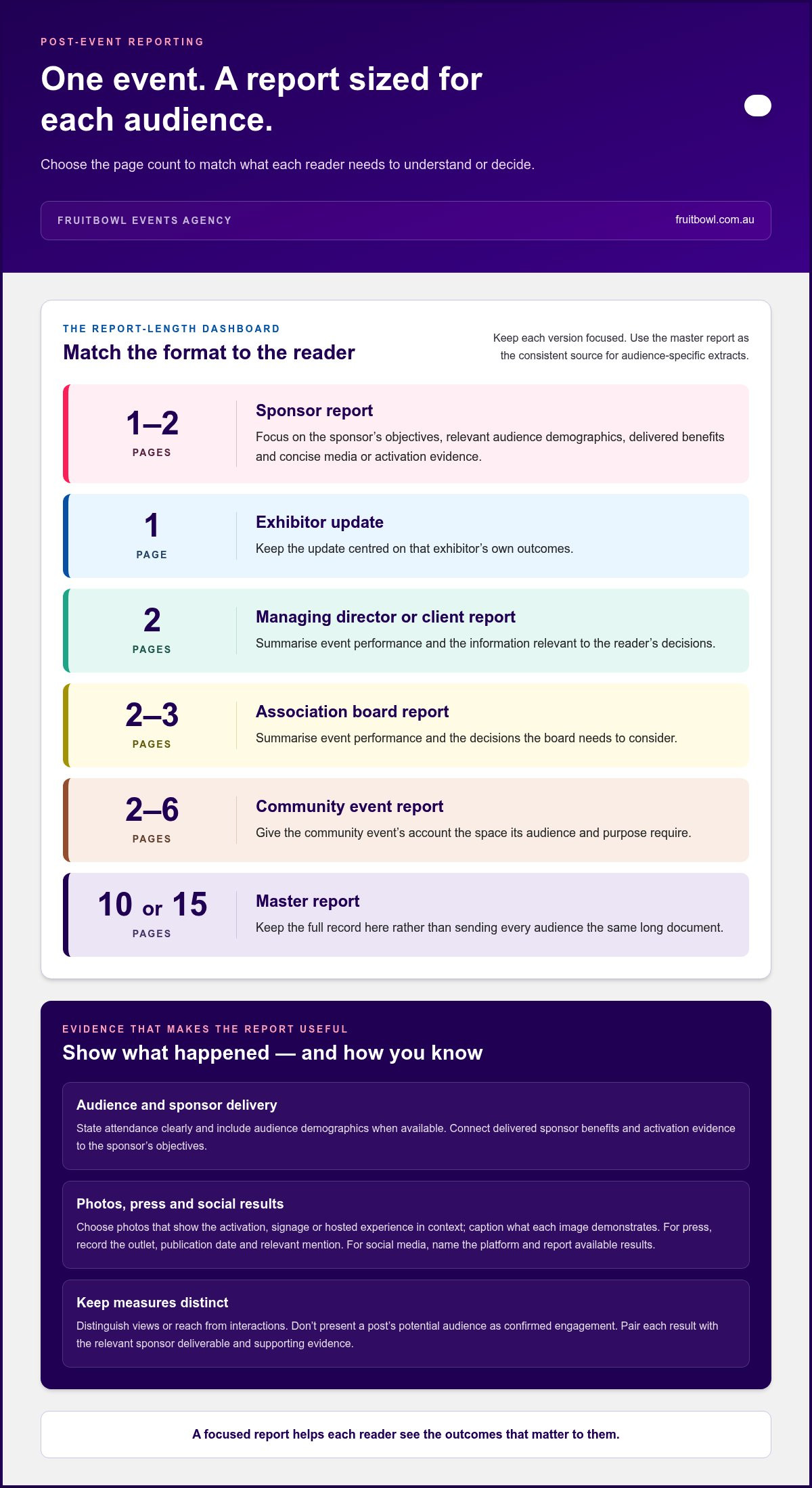
Effective examples include a sponsor report of 1 to 2 pages, a 1-page exhibitor update and a 2-page client report. Present photos with captions identifying sponsor placements, then show press coverage and social results with dates and supporting evidence.

  1. Tailor formats to audiences

    Match the report length and detail to each reader’s decisions. Use 1 to 2 pages for a sponsor, 1 page for an exhibitor and 2 pages for a managing director or client. An association board report can run 2 to 3 pages; a community event report, two to six pages. Keep a 10- or 15-page master report for the full record, rather than sending every audience the same document.

    Include attendance and audience demographics when available. State the attendance figure clearly, then identify audience characteristics relevant to sponsor fit. Avoid implying that a broad event audience automatically represents the sponsor’s target market.

  2. Present event media results

    Choose event photos that show the sponsor’s activation, signage or hosted experience in context. Add concise captions explaining what each image demonstrates instead of filling pages with unlabelled photography. For press coverage, record the outlet, publication date and relevant mention. For social media, name the platform and report available results, distinguishing views or reach from interactions.

    Create a consistent evidence trail by pairing each image, media mention or social result with the relevant sponsor deliverable. Don’t present a post’s potential audience as confirmed engagement. A small set of well-captioned examples gives sponsors clearer proof than a large, unexplained media gallery.

  3. Use effective report examples

    Shape each report to its audience and purpose. A sponsor example might focus on objectives, relevant audience demographics, delivered benefits and a concise media or activation record. An exhibitor update can focus on its own outcomes, while a board report can summarise event performance and decisions. Each format should help its intended reader make the next decision.

    Keep the master document as the source for audience-specific extracts, so figures and descriptions remain consistent. For Corporate Events, this disciplined approach connects event delivery with evidence sponsors can use in renewal discussions.
How to create a post-event report that shows sponsors value, feedback and spend

Revenue and costs against budget

Compare the approved budget with actual revenue and expenditure, then explain significant differences.

  1. Compare revenue with budget

    Separate income by source, including sponsorship, ticketing, grants and other event revenue. For each category, show the budget, actual result and variance in Australian dollars. Record cash sponsorship separately from in-kind support, as they affect the event’s financial position differently.

    Include the actual value and category of other sponsorship agreements. Don’t count an in-kind contribution as cash received or present pledged revenue as collected income. Briefly explain variances linked to attendance, package sales or another identifiable factor.

  2. Review costs and KPI comparisons

    Match actual expenditure to the approved budget categories, such as venue, production, staffing and marketing. Show each variance clearly and explain the operational reason, such as a changed supplier requirement or additional event-day resources. Keep explanations factual, and distinguish a one-off cost from a decision that could affect future events.

    Compare each agreed KPI with its result. If a sponsor objective involved attendance at an activation, report the recorded outcome alongside the target and explain how it was measured. Don’t treat impressions, attendance and engagement as interchangeable. Link each result to the relevant event record and note any KPI that was not achieved. Close with a concise implication for future budgeting, such as adjusting an allocation or refining how a target is measured.

Post-event report sections and data sources

Support each conclusion with the relevant event record or agreed benefit. For missed benefits or event issues, state the facts, impact and corrective action.

  1. List each sponsor and the support provided, then connect each benefit to its evidence. East Gippsland Shire Council’s report template recommends naming sponsors and recording their support. Use the sponsorship agreement as the reference for promised deliverables. Then organise records by deliverable, such as signage, activation space, speaking opportunities or promotional material.
  2. Build an evidence trail for attendance and sponsor outcomes. Use registration or ticketing records for attendance, and include audience demographics when available. Support promised deliverables with dated photographs, event schedules or activation records. For sales attributed to a sponsor, report conversions tracked through the sponsor’s link or code. Identify the source beside each figure so readers can distinguish measured results from estimates or observations.
  3. Document missed benefits and event issues plainly. Name the commitment, explain what was delivered instead and describe the effect on the sponsor. For example, if a scheduled activation did not proceed, record the relevant circumstances and the response. Separate confirmed facts from interpretation. Include the corrective action, its owner and the next review point, so the report supports practical follow-up rather than concealing a shortfall.
  4. Complete the evidence-led sections before writing the executive summary. The summary should reflect the report’s results, issues and recommendations, rather than introduce claims unsupported elsewhere. Send sponsor and funder report extracts within one month of the event, and the full post-event report on day 14. A consistent structure makes updates easier to produce. To plan an event with its reporting needs in view, discuss your event requirements.

Fruitbowl Events Agency: Corporate Events

Fruitbowl Events Agency manages Corporate Events for organisations that need delivery aligned with clear objectives and sponsor commitments. Turn to the team when planning, logistics, programming and on-site delivery need to work together, with sponsor benefits considered as part of the event experience.

This alignment helps organisers plan how to capture useful evidence, from attendance and audience feedback to delivery records and budget outcomes. It also supports a coherent post-event account, with reporting needs considered alongside event decisions rather than assembled as an afterthought. For complex programs, coordinated event management can bring these elements together in one operational plan.

To discuss a Corporate Event, contact Fruitbowl Events Agency or visit fruitbowl.com.au.

Make the next event easier to measure

Treat each report as a planning tool, not just a record of the event. Before the next partnership begins, agree how success will be measured, who will capture the evidence and how the findings will inform future decisions. This gives your next post-event report for sponsors a clear foundation and connects delivery with the outcomes that matter to each partner.

For organisations planning Corporate Events, Festivals & Public Events or Conferences & Seminars, Fruitbowl Events Agency can coordinate delivery around your objectives. A considered approach brings sponsor requirements into the planning process instead of leaving reporting until after the event.

Contact Fruitbowl Events Agency to discuss your next event and take a clear, considered step towards stronger sponsor reporting.

Frequently Asked Questions

What is a post-event report?

A post-event report is a documented review of an event’s objectives, delivery and outcomes. It gives organisers and stakeholders a basis for decisions about future events. For example, a debrief might identify a registration bottleneck, while a sponsor-facing report explains how it affected an agreed activation. Keep the operational review detailed enough for internal planning, then tailor the information to each external audience.

How do I measure whether an event was successful?

Measure success by comparing results with objectives set before the event. If the objective was to encourage participation in a session, use attendance records and participant feedback rather than total event attendance alone. Consider financial performance, audience experience and delivery against the event plan together. A result can meet one objective and fall short on another, so explain what each measure shows.

What should a post-event report for sponsors include?

Include the sponsor’s agreed objectives, a clear account of what was delivered and evidence relevant to those commitments. Add context that helps interpret results, such as how an activation fitted into the attendee journey. Identify any unresolved issue and proposed follow-up. This gives sponsors a useful record for internal stakeholders, rather than a collection of event material with no clear connection to their investment.

How soon after an event should sponsors receive a report?

Send the full post-event report on day 14. This allows time to bring together event records and prepare a considered account. If stakeholders need an earlier update, send a one-page flash report within 48 hours of the last session, then follow with the complete report. Keep preliminary observations distinct from final results, particularly when attendance or sales records still need reconciliation.

What event metrics should be reported to sponsors?

Choose metrics that relate to the sponsor’s objectives rather than reporting every available figure. Attendance can indicate event scale; interaction records can show participation in a specific activation. For digital activity, distinguish views from clicks or other recorded actions. Include the measurement period and source for each result so sponsors can understand what was counted and compare like with like later.

How do you measure sponsor ROI and brand exposure after an event?

Measure sponsor ROI by comparing attributable outcomes with the sponsorship investment and objectives agreed beforehand. Track sales through the sponsor’s unique link or code, and record exposure using evidence such as delivered signage or documented media coverage. Treat exposure separately from sales: visibility can support awareness, but it doesn’t demonstrate revenue on its own. Explain the method and its limits clearly.

A sponsor report should show more than where a logo appeared. A post-event report for sponsors brings together the agreed benefits, evidence of delivery, audience response and relevant budget results; the sponsor-specific version is typically one to two pages. Its purpose is to make the value of the partnership clear and useful for future decisions.

It can be difficult to tell that story when attendance figures, feedback, activation records and costs are scattered across different sources. A clear report connects those details to the sponsor’s objectives and distinguishes measured results from observations.

This guide explains what to include, which data to use and how to tailor the report for different audiences. Learn how to present attendee feedback, demonstrate sponsor deliverables, compare revenue and costs with the budget, and choose a format that gives sponsors a focused account of what happened and what comes next.

Key Takeaways

  • Use separate questionnaires for visitors, exhibitors and speakers so feedback reflects each group’s experience.
  • Shape the report to its audience, keeping the sponsor version focused on the outcomes and evidence they need.
  • Compare actual revenue and costs with the event budget to make financial results clear and useful.
  • Bring attendance, available audience demographics, delivered sponsor benefits and tracked sales into one coherent account.

Attendee feedback and survey results

Use attendee feedback to show how people experienced the event and its sponsor activity. Separate useful findings from general comments so sponsors can understand what the responses indicate.

  1. Collect attendee feedback

    Gather feedback from visitors, exhibitors and speakers using a separate questionnaire for each group. Their experiences differ, so combining responses can obscure useful detail. Send the attendee survey within 48 hours of the event, while activities and sponsor interactions remain easy to recall. Close surveys on day seven, then record the response count and the audience groups represented.

    Keep questions focused on the event experience and sponsor touchpoints. Ask visitors whether they noticed or engaged with a relevant activation, while exhibitors and speakers can comment on other aspects of the event. Include sponsor feedback in the evaluation, too. Avoid presenting a small set of comments as representative of every attendee.

  2. Summarise survey results

    Summarise findings concisely, grouping responses by audience and question. A four-question attendee survey is reported to receive ten times the responses of a long survey. Treat this as a reason to keep questions purposeful, not as a guaranteed outcome for your event. Show response totals alongside percentages or themes so readers can assess the basis for each finding.

    Connect relevant feedback to the sponsor’s objectives. For example, summarise whether visitors recalled a sponsored activity, then include representative comments to add context. Separate direct feedback from your interpretation, and note recurring themes as well as differing views. This gives sponsors a clearer picture of attendee sentiment without treating isolated praise or criticism as universal.

Report formats for different audiences

Effective examples include a sponsor report of 1 to 2 pages, a 1-page exhibitor update and a 2-page client report. Present photos with captions identifying sponsor placements, then show press coverage and social results with dates and supporting evidence.

  1. Tailor formats to audiences

    Match the report length and detail to each reader’s decisions. Use 1 to 2 pages for a sponsor, 1 page for an exhibitor and 2 pages for a managing director or client. An association board report can run 2 to 3 pages; a community event report, two to six pages. Keep a 10- or 15-page master report for the full record, rather than sending every audience the same document.

    Include attendance and audience demographics when available. State the attendance figure clearly, then identify audience characteristics relevant to sponsor fit. Avoid implying that a broad event audience automatically represents the sponsor’s target market.

  2. Present event media results

    Choose event photos that show the sponsor’s activation, signage or hosted experience in context. Add concise captions explaining what each image demonstrates instead of filling pages with unlabelled photography. For press coverage, record the outlet, publication date and relevant mention. For social media, name the platform and report available results, distinguishing views or reach from interactions.

    Create a consistent evidence trail by pairing each image, media mention or social result with the relevant sponsor deliverable. Don’t present a post’s potential audience as confirmed engagement. A small set of well-captioned examples gives sponsors clearer proof than a large, unexplained media gallery.

  3. Use effective report examples

    Shape each report to its audience and purpose. A sponsor example might focus on objectives, relevant audience demographics, delivered benefits and a concise media or activation record. An exhibitor update can focus on its own outcomes, while a board report can summarise event performance and decisions. Each format should help its intended reader make the next decision.

    Keep the master document as the source for audience-specific extracts, so figures and descriptions remain consistent. For Corporate Events, this disciplined approach connects event delivery with evidence sponsors can use in renewal discussions.

Revenue and costs against budget

Compare the approved budget with actual revenue and expenditure, then explain significant differences.

  1. Compare revenue with budget

    Separate income by source, including sponsorship, ticketing, grants and other event revenue. For each category, show the budget, actual result and variance in Australian dollars. Record cash sponsorship separately from in-kind support, as they affect the event’s financial position differently.

    Include the actual value and category of other sponsorship agreements. Don’t count an in-kind contribution as cash received or present pledged revenue as collected income. Briefly explain variances linked to attendance, package sales or another identifiable factor.

  2. Review costs and KPI comparisons

    Match actual expenditure to the approved budget categories, such as venue, production, staffing and marketing. Show each variance clearly and explain the operational reason, such as a changed supplier requirement or additional event-day resources. Keep explanations factual, and distinguish a one-off cost from a decision that could affect future events.

    Compare each agreed KPI with its result. If a sponsor objective involved attendance at an activation, report the recorded outcome alongside the target and explain how it was measured. Don’t treat impressions, attendance and engagement as interchangeable. Link each result to the relevant event record and note any KPI that was not achieved. Close with a concise implication for future budgeting, such as adjusting an allocation or refining how a target is measured.

Post-event report sections and data sources

Support each conclusion with the relevant event record or agreed benefit. For missed benefits or event issues, state the facts, impact and corrective action.

  1. List each sponsor and the support provided, then connect each benefit to its evidence. East Gippsland Shire Council’s report template recommends naming sponsors and recording their support. Use the sponsorship agreement as the reference for promised deliverables. Then organise records by deliverable, such as signage, activation space, speaking opportunities or promotional material.
  2. Build an evidence trail for attendance and sponsor outcomes. Use registration or ticketing records for attendance, and include audience demographics when available. Support promised deliverables with dated photographs, event schedules or activation records. For sales attributed to a sponsor, report conversions tracked through the sponsor’s link or code. Identify the source beside each figure so readers can distinguish measured results from estimates or observations.
  3. Document missed benefits and event issues plainly. Name the commitment, explain what was delivered instead and describe the effect on the sponsor. For example, if a scheduled activation did not proceed, record the relevant circumstances and the response. Separate confirmed facts from interpretation. Include the corrective action, its owner and the next review point, so the report supports practical follow-up rather than concealing a shortfall.
  4. Complete the evidence-led sections before writing the executive summary. The summary should reflect the report’s results, issues and recommendations, rather than introduce claims unsupported elsewhere. Send sponsor and funder report extracts within one month of the event, and the full post-event report on day 14. A consistent structure makes updates easier to produce. To plan an event with its reporting needs in view, discuss your event requirements.

Fruitbowl Events Agency: Corporate Events

Fruitbowl Events Agency manages Corporate Events for organisations that need delivery aligned with clear objectives and sponsor commitments. Turn to the team when planning, logistics, programming and on-site delivery need to work together, with sponsor benefits considered as part of the event experience.

This alignment helps organisers plan how to capture useful evidence, from attendance and audience feedback to delivery records and budget outcomes. It also supports a coherent post-event account, with reporting needs considered alongside event decisions rather than assembled as an afterthought. For complex programs, coordinated event management can bring these elements together in one operational plan.

To discuss a Corporate Event, contact Fruitbowl Events Agency or visit fruitbowl.com.au.

Make the next event easier to measure

Treat each report as a planning tool, not just a record of the event. Before the next partnership begins, agree how success will be measured, who will capture the evidence and how the findings will inform future decisions. This gives your next post-event report for sponsors a clear foundation and connects delivery with the outcomes that matter to each partner.

For organisations planning Corporate Events, Festivals & Public Events or Conferences & Seminars, Fruitbowl Events Agency can coordinate delivery around your objectives. A considered approach brings sponsor requirements into the planning process instead of leaving reporting until after the event.

Contact Fruitbowl Events Agency to discuss your next event and take a clear, considered step towards stronger sponsor reporting.

Frequently Asked Questions

What is a post-event report?

A post-event report is a documented review of an event’s objectives, delivery and outcomes. It gives organisers and stakeholders a basis for decisions about future events. For example, a debrief might identify a registration bottleneck, while a sponsor-facing report explains how it affected an agreed activation. Keep the operational review detailed enough for internal planning, then tailor the information to each external audience.

How do I measure whether an event was successful?

Measure success by comparing results with objectives set before the event. If the objective was to encourage participation in a session, use attendance records and participant feedback rather than total event attendance alone. Consider financial performance, audience experience and delivery against the event plan together. A result can meet one objective and fall short on another, so explain what each measure shows.

What should a post-event report for sponsors include?

Include the sponsor’s agreed objectives, a clear account of what was delivered and evidence relevant to those commitments. Add context that helps interpret results, such as how an activation fitted into the attendee journey. Identify any unresolved issue and proposed follow-up. This gives sponsors a useful record for internal stakeholders, rather than a collection of event material with no clear connection to their investment.

How soon after an event should sponsors receive a report?

Send the full post-event report on day 14. This allows time to bring together event records and prepare a considered account. If stakeholders need an earlier update, send a one-page flash report within 48 hours of the last session, then follow with the complete report. Keep preliminary observations distinct from final results, particularly when attendance or sales records still need reconciliation.

What event metrics should be reported to sponsors?

Choose metrics that relate to the sponsor’s objectives rather than reporting every available figure. Attendance can indicate event scale; interaction records can show participation in a specific activation. For digital activity, distinguish views from clicks or other recorded actions. Include the measurement period and source for each result so sponsors can understand what was counted and compare like with like later.

How do you measure sponsor ROI and brand exposure after an event?

Measure sponsor ROI by comparing attributable outcomes with the sponsorship investment and objectives agreed beforehand. Track sales through the sponsor’s unique link or code, and record exposure using evidence such as delivered signage or documented media coverage. Treat exposure separately from sales: visibility can support awareness, but it doesn’t demonstrate revenue on its own. Explain the method and its limits clearly.

Back to Articles
Request A Quote

Make an
Enquiry

Untitled design

What Makes Us Different?

True end-to-end solution so you can hand off to us, focus on your priorities and enjoy the event without any stress

Unmatched industry expertise looking after diverse range of high-profile events, cultural festivals & activations

Meticulous attention to every detail and precise execution of events with our streamlined processes

Tailored solutions with bespoke strategies to ensure we align with your brand and objectives

Make an Enquiry

  • This field is for validation purposes and should be left unchanged.
  • This field is for validation purposes and should be left unchanged.