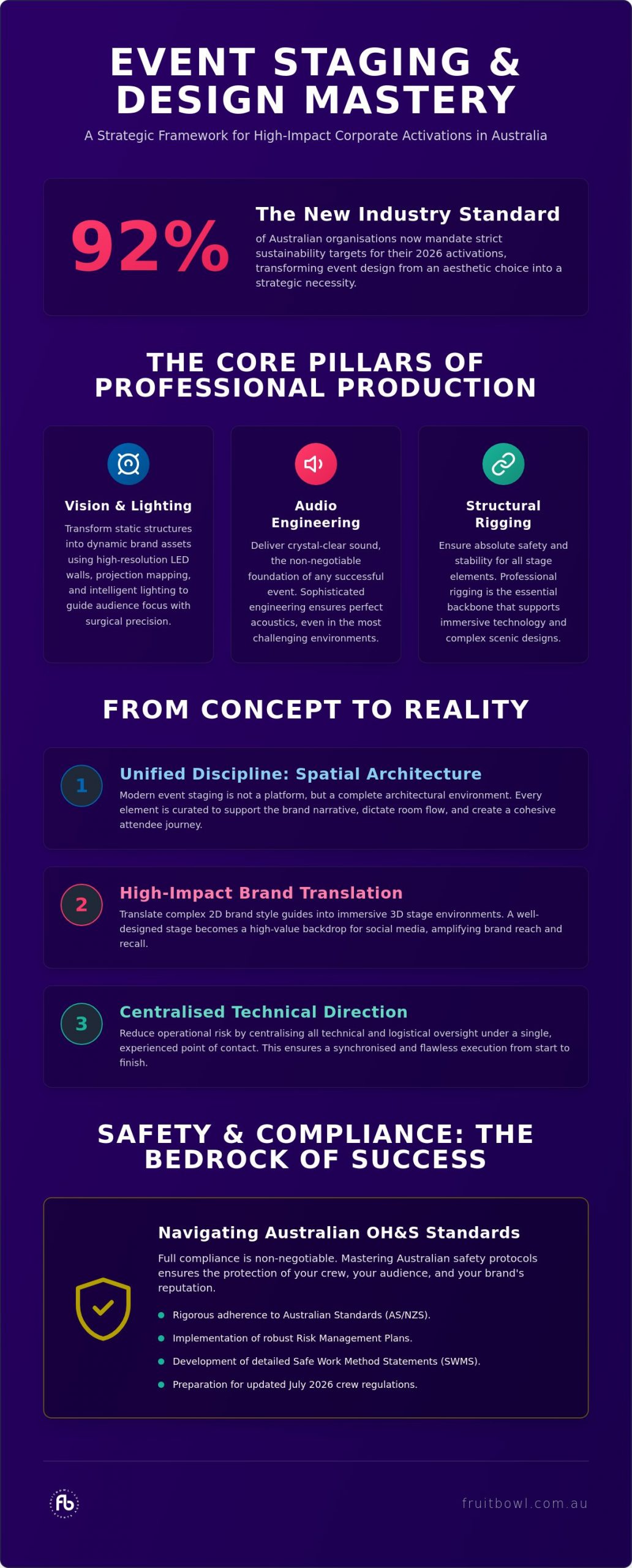
With 92% of Australian organisations now mandating strict sustainability targets for their 2026 activations, the technical requirements for event staging and design have shifted from simple aesthetics to complex strategic execution. You likely recognise that a physical environment must do more than just look impressive; it’s required to function as a seamless extension of your brand narrative while adhering to rigorous safety protocols. The pressure to innovate without risking a technical failure or a budget blowout is a challenge you’ve likely faced when moving from a creative concept to a physical structure.
We understand that a successful production requires a composed, expert approach to manage the delicate balance between creative ambition and logistical reality. This guide provides the strategic framework you need to master the intersection of architectural precision and technical excellence. You’ll gain the certainty that your technical execution will match your brand vision while remaining fully compliant with Australian OH&S standards and the updated July 2026 crew regulations. We will examine how to integrate immersive technology and sustainable materials to ensure your next project is both flawless and future-proof.
Key Takeaways
- Understand how modern event staging and design functions as a unified discipline of spatial architecture rather than a mere physical platform.
- Master the technical trifecta of audio-visual management, lighting, and structural rigging to create a cohesive and immersive environment.
- Discover the precise methodology for translating complex 2D brand style guides into high-impact 3D stage environments that resonate with your audience.
- Ensure full compliance with Australian Standards (AS/NZS) and safety protocols by implementing robust Risk Management Plans and Safe Work Method Statements.
- Reduce operational risk by centralising technical direction and talent logistics under a single, experienced point of contact for your production.
Beyond the Platform: The Strategic Role of Event Staging and Design
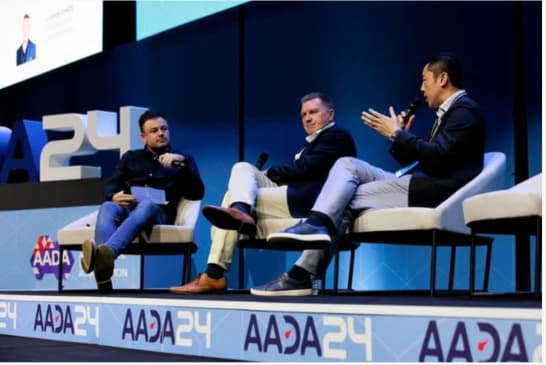
In the high-stakes environment of corporate activations and brand launches, event staging and design is no longer a secondary consideration. It has evolved into a unified discipline that blends spatial architecture with precise technical direction. Rather than merely elevating a speaker, the stage serves as the literal and metaphorical centrepiece of the entire experience. It dictates the flow of the room, the focus of the audience, and the overall professional polish of the production. When a stage is designed with strategic intent, it transforms a standard presentation into a powerful brand statement.
Effective staging draws heavily from the principles of Scenic design, where every element in the physical environment is curated to support a specific narrative or mood. We’ve moved beyond the era of the simple “riser” setup. Modern high-impact productions utilise multi-dimensional environments that wrap around the audience, creating a sense of immersion that traditional layouts simply cannot achieve. This alignment ensures that the attendee’s journey is cohesive from the moment they enter the space until the final session concludes. It’s about creating a world that reflects your brand’s authority and creative vision.
The Evolution of Modern Event Environments
As we approach 2026, the industry is witnessing a significant shift toward modular and sustainable structures. Research indicates that 92% of organisations now have a sustainability target for their events, which has made reusable, low-waste staging components the industry standard. These structures often integrate technology directly into the build, such as LED surfaces or smart lighting that responds to real-time data. Off-the-shelf staging solutions frequently fail to meet these rigorous corporate brand standards because they lack the flexibility to adapt to specific architectural requirements. Moving from passive viewing to interactive stage designs allows for a more dynamic relationship between the presenter and the audience, fostering deeper connection and engagement.
Why Strategic Design Dictates Event ROI
Strategic design directly influences audience engagement and the subsequent social media amplification of an event. A well-executed stage acts as a high-value backdrop for photography and video content, ensuring that your brand’s visual identity is captured and shared across digital platforms. There is a profound psychological impact associated with stage height, focal points, and lighting. These elements subconsciously signal authority and energy levels to the attendees. Strategic staging is the integration of brand values into physical architecture. By meticulously planning these details, you ensure that every dollar spent on production contributes to a measurable increase in attendee perception and brand recall.
The Core Pillars of Professional Event Production
High-impact event staging and design relies on a “technical trifecta” where audio-visual systems, lighting, and structural rigging operate as a single, integrated ecosystem. In a professional production environment, these elements cannot exist in isolation. If one pillar underperforms, the entire brand narrative is compromised. Technical direction ensures that every piece of hardware is synchronised to the event’s minute-by-minute run sheet, providing a level of precision that eliminates the risk of technical failure. This synchronicity is achieved through meticulous av management for events, which treats technical oversight as a strategic priority rather than a logistical after-thought.
Vision and Lighting: Creating Atmosphere
Lighting is the primary tool for transforming a static physical structure into a dynamic brand asset. In 2026, we utilise high-resolution LED walls and projection mapping to create depth and movement within the stage environment. Intelligent lighting fixtures allow us to guide the audience’s focus with surgical precision, shifting attention from a keynote speaker to a live performance or a brand reveal. Balancing ambient venue light with stage-specific illumination is essential to ensure that your visual content remains crisp and legible for both the live audience and the digital broadcast.
Audio Engineering for Large-Scale Staging
Crystal-clear audio is the non-negotiable foundation of any successful conference or seminar. Managing acoustics in challenging environments requires sophisticated engineering, whether you’re dealing with the wind at an outdoor festival or the reflective surfaces of a glass-walled ballroom. High-fidelity sound ensures that every word from a keynote speaker carries the weight it deserves. We integrate audio hardware directly into the stage design to maintain a clean, uncluttered aesthetic. This approach hides the complexity of the system while delivering a consistent, high-quality sonic experience for every attendee in the room.
Rigging and Structural Integrity
Rigging represents the “invisible” work that underpins the entire production. It involves complex weight-load calculations for trusses and motors that support tonnes of equipment above the audience and performers. Rigging is fundamentally about Safety Standards and Compliance, ensuring that every hanging point meets Australian engineering requirements. Managing technical riders for high-profile talent also falls within this pillar, as their specific requirements for lighting and sound must be safely accommodated within the structural design. If you’re planning a complex activation, partnering with professional production specialists ensures that these critical safety elements are managed with absolute rigour.
Bridging Creative Vision and Technical Execution
Translating a 2D brand style guide into a high-impact 3D stage environment is where creative vision meets engineering reality. It’s not enough to simply place a logo on a screen; the physical structure itself must communicate your brand’s core values through its form and function. This transition from page to platform is a cornerstone of professional event staging and design. By utilising comprehensive corporate event management services, you ensure that creative oversight remains constant throughout the build. This level of management prevents the brand message from being diluted by technical limitations. While dry hire options provide the hardware, they lack the strategic layer required to align a complex build with a corporate narrative. Full-service production offers a single point of accountability for everything from the initial sketch to the final “Bump-out” logistics.
The Design Process: From Sketch to Stage
A strategic event design process begins long before the first truss is bolted together. We use detailed 3D renders and CAD drawings to provide a virtual walkthrough of the environment, allowing stakeholders to visualise the final product. This phase is critical for identifying potential sightline issues or technical bottlenecks. For multi-day conferences, we often incorporate modular elements that allow the stage to be reconfigured quickly between sessions. This flexibility ensures the environment remains dynamic and supports varying programming needs without requiring a full rebuild.
Thematic Integration and Brand Activations
Textures and materials play a vital role in reinforcing brand messaging. For instance, a government activation in 2026 might utilise open-plan staging with transparent materials and integrated accessibility ramps to symbolise transparency and public service. These design choices aren’t merely aesthetic; they’re functional representations of the organisation’s mission. When designing for hybrid or broadcasted events, we must also consider how the stage appears through a lens. Lighting must be adjusted for camera sensors, and stage depths are calculated to provide visual interest on a 2D screen. This ensures that the brand impact is as strong for the digital viewer as it is for the person in the front row.
Logistics are the backbone of this creative translation. Managing the “Bump-in” for a custom build requires a methodical approach to timing, crew safety, and venue restrictions. A disciplined production team handles these complexities with a steady hand, ensuring that the transition from an empty hall to a fully realised brand environment happens with predictable precision. This methodical pace ensures that every element is tested and verified before the first guest arrives.
Navigating Australian Safety Standards and Compliance
Compliance within the Australian event industry is a rigorous process that demands absolute precision. For high-impact event staging and design, adhering to the relevant Australian Standards (AS/NZS) is the primary method of mitigating physical and legal risk. Temporary structures, including stages and marquees, must comply with the National Construction Code (NCC) and specific standards for structural integrity. When a project involves complex custom builds or outdoor environments, obtaining a structural engineering sign-off is a non-negotiable step. This ensures the platform can withstand the calculated weight loads of performers, equipment, and environmental factors like wind. In the context of government event planning, these compliance measures are often scrutinised at the highest level, requiring a partner who understands the nuances of public-sector accountability.
Managing the documentation trail is just as critical as the physical build. Every activation requires a comprehensive Risk Management Plan and site-specific Safe Work Method Statements (SWMS). These documents outline exactly how technical teams will manage high-risk activities such as working at heights or operating heavy machinery. We approach this process with a methodical discipline, ensuring that every safety protocol is verified before a single piece of equipment is unloaded. This level of oversight provides you with the security that your production is not only visually stunning but also fully protected against unforeseen liabilities.
Occupational Health and Safety (OH&S) in Production
The safety of your audience and crew is the ultimate priority on any site. Effective OH&S management involves identifying and neutralising potential hazards such as trip points from cable runs or inadequate emergency egress routes. All electrical equipment must undergo rigorous test and tag procedures to meet AS/NZS 3000 and AS/NZS 3002 standards. As an organiser, you hold a legal responsibility to provide a safe environment. We take that burden off your shoulders by maintaining strict supervision over every technical detail, from the stability of the rigging to the clarity of the exit signage.
Accessibility and Inclusivity (DDA Compliance)
Modern event design must be inclusive by nature. Meeting the requirements of the Disability Discrimination Act (DDA) means ensuring that speakers, performers, and attendees can access every part of the environment with dignity. We integrate custom ramps and lifts directly into the stage design to maintain a sleek, professional aesthetic while providing seamless access. Accessibility is a design requirement, not an afterthought. By planning for inclusivity from the initial concept stage, you create an environment that welcomes all participants without compromising the visual impact of your brand activation.
If you require a production partner who prioritises safety and compliance as highly as creative vision, contact our expert team today to discuss your 2026 event requirements.
Partnering with a Strategic Event Production Agency
Selecting a production partner is a decision that extends far beyond technical capability; it is an exercise in strategic risk management. A 28-year history in corporate event management serves as the ultimate mitigator for the complexities inherent in live activations. This depth of experience allows us to anticipate challenges before they manifest on-site, providing a level of security that only decades of high-stakes execution can offer. By providing a single point of contact for all event staging and design, audio-visual requirements, and talent logistics, we eliminate the communication gaps that often lead to budget blowouts or technical misalignment.
Our role is to act as a “safe pair of hands” for your brand, bringing order and clarity to environments where the margin for error is non-existent. We treat every project as a mission-critical operation, ensuring that the technical execution is as disciplined as the creative vision. This composed approach provides you with the certainty that every detail, from structural engineering sign-offs to the synchronisation of lighting cues, is under expert supervision. We don’t just provide equipment; we provide the strategic oversight required to deliver a frictionless experience for both the organiser and the attendee.
The Fruitbowl Methodology: Precision and Reassurance
The Fruitbowl methodology is built on a foundation of methodical, end-to-end management. We oversee the entire project lifecycle, beginning with strategic planning and moving through to logistics and final technical direction. This sequential approach ensures that every moving part is integrated seamlessly into the master production timeline. On-site, our team remains unflappable, utilising established contingency plans and troubleshooting protocols to manage the unexpected with quiet efficiency. We leverage a nationwide network of trusted suppliers and technicians, ensuring that the quality of your production remains consistent regardless of the location across Australia.
Securing Your Event Legacy
The impact of a well-executed production resonates long after the final guest has departed. Staging isn’t just a platform for a single day; it’s an investment in your brand’s long-term reputation and industry authority. When you partner with an elite agency, you gain the freedom to focus on your high-level objectives while we manage the intricate technical architecture behind the scenes. Our commitment to excellence ensures that your event legacy is defined by flawless execution and architectural precision. To ensure your next activation meets these rigorous standards, organise a consultation with Fruitbowl Events Agency and secure the strategic oversight your brand requires.
Elevating Your Production Standards
Successful event production in 2026 requires more than a simple physical platform; it demands a disciplined integration of brand narrative and technical precision. We’ve established that event staging and design functions as the architectural foundation of your activation, where every element from structural rigging to immersive lighting must operate in perfect synchronicity. You now have the strategic framework to navigate Australian safety standards and ensure your environment is both inclusive and fully compliant.
Managing these multifaceted requirements requires a partner who offers a “safe pair of hands” and a meticulous eye for detail. With over 28 years of industry-leading experience, we provide the authoritative expertise needed to deliver high-stakes government and corporate activations with absolute certainty. Our comprehensive end-to-end event management ensures that your creative vision is supported by rigorous technical oversight and logistical clarity. When you prioritise structural integrity and strategic design, you secure a legacy of professional excellence for your brand. Partner with the experts in event staging and design to ensure your next project is delivered with flawless impact. We look forward to helping you transform your vision into a sophisticated reality.
Frequently Asked Questions
What is the difference between event staging and event design?
Event staging refers to the physical infrastructure and technical execution, including platforms, rigging, and AV hardware. Event design is the creative and strategic layer that dictates the aesthetic vision and brand alignment of the space. While staging provides the “what” of the physical build, design provides the “why” behind the attendee experience. Together, they form a unified discipline of spatial architecture that supports your brand narrative.
Do I need a structural engineer for my event stage in Australia?
You require a structural engineer’s sign-off for any custom-built stage or temporary structure that exceeds standard height or weight-load limits. This is a mandatory requirement for outdoor festivals and complex public activations to ensure full compliance with the National Construction Code. Engineering certification provides the legal and physical security that the structure is safe for performers, crew, and audiences under all calculated conditions.
How far in advance should I book my event staging and production?
For high-impact corporate or public events, you should ideally engage your production partner six to twelve months in advance. This lead time allows for detailed 3D rendering, custom fabrication, and the securing of specialised technical crew. Early engagement is particularly critical for peak periods in the Australian event calendar, ensuring that all logistical and regulatory requirements are managed with the necessary precision and care.
Can custom stages be built for outdoor festivals and public events?
Custom stages are frequently designed and constructed for outdoor environments, provided they meet rigorous wind-loading and site-specific safety requirements. These builds often incorporate modular elements to accommodate varying terrain or unpredictable weather conditions. Professional event staging and design for outdoor activations requires a meticulous approach to structural integrity and moisture protection for sensitive technical equipment to ensure a flawless and safe delivery.
What technical documentation is required for staging compliance?
Essential compliance documentation includes site-specific Safe Work Method Statements (SWMS), a comprehensive Risk Management Plan, and structural engineering certificates. You also must maintain up-to-date “test and tag” records for all electrical hardware to comply with AS/NZS 3000 and AS/NZS 3002 standards. These documents provide the verified paper trail necessary to satisfy venue requirements, insurance obligations, and Australian OH&S regulations during a high-stakes activation.
How does staging impact the acoustics of a corporate conference?
Staging materials and their placement directly influence sound reflection and absorption within a venue. A raised platform can create hollow acoustic pockets, which engineers must neutralise using specific damping materials or precision-tuned audio arrays. Integrating audio hardware directly into the stage design ensures that sound is projected clearly to every attendee without being obstructed by physical architecture, maintaining the professional polish of your keynote presentations.
What are the current trends in sustainable event staging for 2026?
The primary trends for 2026 focus on modular, reusable structures and the use of low-emission, recyclable materials. With 92% of Australian organisations now mandating sustainability targets, there is a significant shift away from single-use scenic elements. Designers are increasingly utilising digital surfaces and high-resolution LED technology to reduce physical waste while maintaining a high-impact visual experience that aligns with corporate environmental responsibilities.
How do you integrate brand activations into a physical stage build?
Brand activations are integrated through the strategic use of textures, digital surfaces, and custom-fabricated elements that mirror your organisation’s style guide. This process moves beyond placing a logo on a screen to making the stage itself a 3D representation of the brand narrative. Professional event staging and design ensures that these physical elements support the interactive goals of the activation while remaining functional for speakers and performers.
OUR BLOG
Event Insights & Expertise
Our blog is your go-to resource for all things events. From expert insights and the latest industry trends to practical planning tips, we share everything you need to deliver standout experiences.
Contact Us