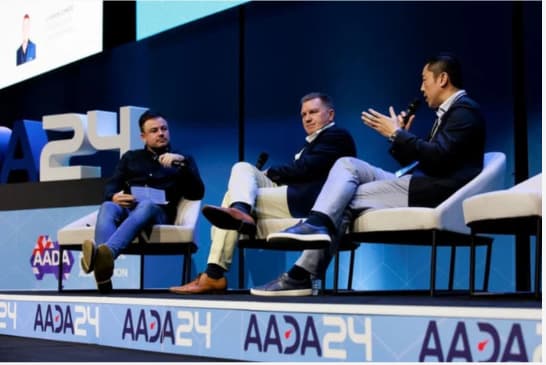
Creating a premium conference experience delegates value

A premium conference is remembered not only for its programme, but for how smoothly the whole experience works. Creating a premium conference experience means balancing useful sessions with a suitable venue, meaningful networking, reliable event services and thoughtful hospitality. Food, drinks and clear travel information can shape delegates’ experience just as much as what happens on stage.

Delegates value relevant content and well-run logistics, but the moments between sessions matter too. Comfortable breaks, suitable meals and straightforward travel information help the day feel considered rather than improvised.

This guide explains how to bring those elements together. You’ll learn how to shape a balanced agenda, select a venue around delegates’ needs, make networking more purposeful and coordinate the practical services that keep a conference running smoothly. It also explores how food, beverage and transport choices can add a personal, memorable dimension without distracting from the event’s objectives.

Key Takeaways

  • Shape the agenda around useful learning, interactive moments and well-timed breaks so delegates can stay engaged throughout the programme.
  • Match the venue to the event’s purpose and delegates’ needs, considering access, atmosphere, room layouts and the facilities required.
  • Create intentional opportunities for attendees to connect through private discussions, small-group formats and relevant introductions.
  • Coordinate audiovisual equipment, internet access and catering as part of one operational plan, with each element supporting the delegate experience.
  • Make hospitality feel considered with suitable food and beverage choices and clear travel information that helps delegates arrive and move through the event with ease.

1. Balancing education, activities and breaks in the agenda

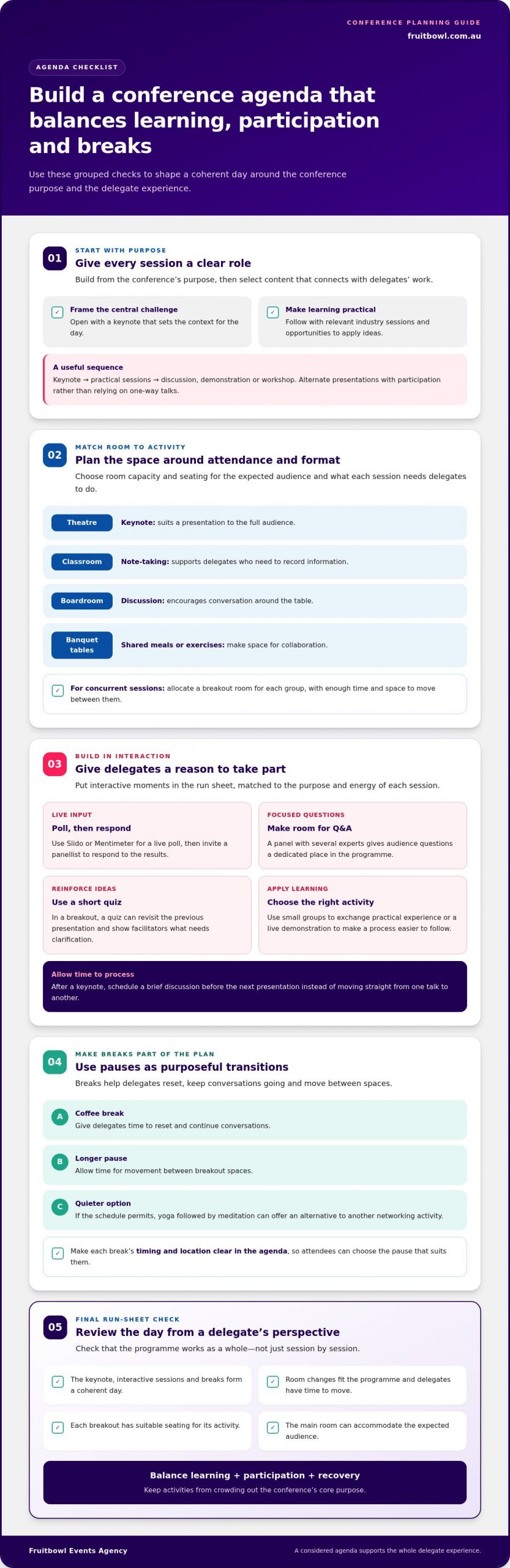
Start with the conference’s purpose, then give each session a clear role. A corporate agenda might open with a keynote that frames the central challenge, followed by practical sessions on relevant industry issues. Alternate presentations with discussions, demonstrations or workshops so delegates can apply ideas, not just hear them. Content that connects with attendees’ work and leaves room for participation makes a stronger impression.

Plan capacity and room layouts around expected attendance and each activity. Theatre seating suits a keynote, while classroom seating supports note-taking and boardroom layouts encourage discussion. Banquet tables work well for shared meals or collaborative exercises. If the programme includes concurrent sessions, allocate a breakout room for each group and allow enough time and space to move between them.

Build interaction into the run sheet instead of adding it as an afterthought. For example, use Slido or Mentimeter for a live poll, then ask a panellist to respond to the results. A Q&A panel with several experts gives audience questions a focused place in the programme. In a breakout session, a short quiz can reinforce the previous presentation and help facilitators identify topics that need clarification.

Match activities to each session’s purpose and energy. A small-group exercise helps delegates exchange practical experience, while a live demonstration can make a process easier to follow. Schedule a brief discussion after a keynote before moving to the next presentation. This gives participants time to process information and prevents the agenda from becoming a succession of one-way talks.

Use breaks as planned transitions between demanding sessions. A coffee break gives delegates time to reset and continue conversations; a longer pause can allow for movement between breakout spaces. If the schedule permits, yoga followed by meditation offers a quieter alternative to another networking activity. Make the timing and location clear in the agenda so attendees can choose the break that suits them.

Before finalising the run sheet, review the sequence from a delegate’s perspective. Check that the keynote, interactive sessions, breaks and room changes form a coherent day. Confirm that each breakout has suitable seating and that the main room can accommodate the expected audience. A well-paced programme balances learning, participation and recovery without letting activities crowd out the event’s core purpose.

2. Choosing an experiential venue suited to delegates and event needs

Choose a venue by mapping the delegate journey: arrival, registration, the keynote, breaks and departure. Match its location and atmosphere to the event’s purpose, audience and timeframe. For example, a convention and exhibition centre situated near accommodation, restaurants and local attractions can easily support a programme beyond the meeting room.

Access matters as much as the room itself. For any major city conference, consider connections to public transport, airports, train stations and accommodation. Compare venue hire arrangements and what each package includes, such as catering, technical support and seating. A site visit or virtual tour helps assess the space, facilities and ambience before booking. Check how delegates will move between the main room, breakout spaces and networking areas.

Design, staging and branding can give the venue a clear purpose and help delegates find their way. Use a consistent visual system across stage backdrops, presentation screens, signage and registration points. Make sure the keynote is visible from different seats, and align lighting and staging with the event’s tone. Consistent branding makes a lasting impression when it supports the content rather than competing with it.

Technology should support participation, not distract from it. An event app can bring schedules, speaker biographies, polls, quizzes and networking functions together. Live polls and surveys can invite responses during a session, while live streaming can include people who cannot attend in person. Augmented or virtual reality can support a product demonstration or virtual tour when it directly relates to the conference content.

For hybrid sessions, plan the room for both in-person and remote audiences. Position audiovisual equipment so speakers and presentations are clear on screen, and arrange cameras to capture the stage and discussion. Decide how questions from remote attendees will reach the speaker. A virtual tour and technical walkthrough can reveal sightline, sound and connectivity issues before event day.

Outdoor settings can create a distinctive atmosphere, but the programme needs a weather contingency. Identify an indoor alternative or a clear relocation plan, and tell delegates where to go if conditions change. For event permits, safety rules and insurance, map requirements to the venue, council area, attendance format and planned activities. Record venue procedures, emergency access, weather contingencies and insurance responsibilities in the event plan before confirming the site.

These decisions are easier to coordinate when venue, staging and delegate logistics are planned together. For a conference that needs joined-up delivery, explore Fruitbowl Events Agency as a way to structure the experience around its purpose.

3. Private networking and attendee introductions

Networking works best when it supports business goals and delegates’ priorities. Define the intended outcomes first, such as knowledge sharing, partnerships or professional connections. Then shape introductions around shared interests, roles or challenges. An event app can help attendees personalise their agenda, connect with participants and book one-to-one meetings with speakers or exhibitors. Tailored recommendations make relevant conversations easier to find in a busy programme.

Give conversations a structure. Roundtables, hosted dinners and small mastermind groups create more focused settings than an open reception. A concierge-led matchmaking process can connect delegates with relevant contacts before the event, while private networking sessions with senior executives or speakers offer a more intimate format. Speed networking is another option: divide a one-hour block into six- or ten-minute conversations, with attendees rotating between introductions.

For a simple prompt, invite delegates to meet one new person each day. Put dedicated networking time in the schedule instead of expecting connections to happen between presentations. Registration can also collect one or two fun facts from each attendee, giving hosts an easy conversation starter. Clear prompts and a welcoming host help people join a discussion without having to make the first move alone.

Premium registration should make arrival and participation straightforward. Provide clear instructions, accessible registration, on-site assistance and a named contact for delegate enquiries. Concierge support can help with schedules, meeting arrangements and travel information. Share flight, transfer and group meeting-point details before the event, then make venue routes and session locations easy to follow. These practical services reduce friction and leave more room for engagement.

Select speakers and entertainment to suit the event’s purpose, audience and tone. Choose presenters with relevant expertise and useful perspectives, then brief them clearly on attendee needs. An industry leader’s exclusive workshop may suit a specialist audience; a considered musical performance could complement an evening programme without overshadowing the conference content. Let the venue, timing and audience expectations guide each choice.

Promote the value delegates will receive through targeted email, social media, event listings and press releases. After the event, assess satisfaction with attendee questionnaires and feedback on sessions, networking and logistics. Compare responses with the conference’s stated business objectives, such as useful introductions, participation or follow-up opportunities. This gives organisers a practical view of attendee value and return on investment, and helps refine future corporate events.
Creating a premium conference experience delegates value

4. Audiovisual equipment, internet and catering

Technical reliability starts with matching equipment to the programme. List each presentation format and map its requirements: microphones for speakers and audience questions, screens for slides, and playback for demonstrations. Test presentations in the room before delegates arrive, including sound levels from different seats. For a panel, confirm that every panellist can be heard clearly. The run sheet should identify who cues each visual and what happens if a presentation changes.

Internet access supports more than browsing. Attendees may need event apps, live polls, online materials or remote participation during the same session. Ask the venue how its connection will support the planned uses, then test those functions during a technical walkthrough. If delegates will use an app for schedules or questions, provide instructions at registration. A printed schedule can also help participants follow the programme if their devices run out of battery.

For a hybrid conference, plan the in-room and remote experience together. Set camera positions to show the speaker and presentation, and make sure remote questions reach the host. Rehearse transitions between keynote slides, panel discussion and streamed content. Give the technical lead the run sheet and contact details for venue staff. These steps help prevent equipment changes from interrupting networking or drawing attention away from speakers.

Catering also shapes the working day. Review the venue’s food and beverage packages against session timings, delegate movement and the event’s tone. Confirm how dietary requirements will be collected and communicated to the catering team. A clearly labelled lunch service, for example, helps delegates identify suitable options without delaying the break. Discuss menus and service arrangements with the venue, including how food will be served in breakout spaces or business lounges.

VIP networking meals can provide a quieter setting for focused conversation. Reserve a suitable room or dining area and make the format clear in the invitation. An optional chef’s surprise can create a lunchtime talking point, but it should sit alongside other menu choices rather than replace them. For a broader delegate group, build hospitality around comfortable service, useful timing and food that supports the schedule.

Coordinate catering, audiovisual cues and room access in one operational plan. If lunch follows a keynote, confirm when service begins, where delegates enter and how the next session will be announced. Share practical food and venue details through registration information and approved social media updates. A final walkthrough can check the microphone, screen, internet access, meal setup and signage together. This integrated preparation helps the conference run smoothly without making hospitality feel like an interruption.

5. Creating memorable food, beverage and transport experiences

Hospitality becomes memorable when it reflects the conference’s audience and purpose. A seated meal may support focused discussion at a leadership forum; a training conference may work better with an efficient lunch and refreshments near session spaces. Shape food and beverage packages around the programme, delegate needs and event tone. The aim is to make every service feel considered, not simply inserted between presentations.

Use meals to create opportunities for connection. A hosted dinner can bring speakers and delegates together around a shared topic, while a lounge area can give premium ticket holders a quieter place to talk. If you offer a chef’s surprise, make it an optional menu choice rather than the only meal. Curious attendees get a talking point without limiting other delegates’ choices.

Include dietary information in registration and pass it clearly to the venue’s catering team. Confirm how suitable meals will be identified and served, then include those details in delegate communications. A clearly marked station, for example, helps guests find their meal without interrupting conversations or delaying the programme. Coordinate serving times with session transitions so catering fits seamlessly into the day.

Travel arrangements shape the experience before attendees reach the venue. Provide clear information about flights, transfers and group meeting points, then make arrival instructions easy to find in event emails. For a conference with delegates travelling from different Australian cities, explain where transfers depart and how attendees can reach the venue. Clear directions reduce uncertainty and help delegates arrive ready to participate.

Consider transport extras only when they suit the event and its delegates. A business-class flight upgrade may fit an executive programme, while a scenic bus tour can add a local experience around the conference schedule. Share the purpose, meeting point and timing in advance. For a hybrid event, give the virtual audience a brief introduction to local food or places, connecting remote participants with the setting without implying they are travelling with the group.

Bring these details together in one hospitality plan: menu choices, dietary communication, meal timing, transfer information and delegate updates. Review the plan alongside the programme, so food and transport support networking and discussions rather than compete with them. For a conference requiring coordinated event delivery, plan your conference experience with Fruitbowl Events Agency.

Food and beverage packages can shape the delegate experience. Organisers can reserve high-end food, beverage and lounge areas for premium ticket holders. Clear information about flights, transfers and group meeting points reduces stress, while a scenic bus tour can enrich the experience.

Fruitbowl Events Agency: Corporate Events

Fruitbowl Events Agency can bring a conference’s agenda, venue, networking and hospitality together in one coordinated event plan. Turn to the team when you need support aligning event objectives with the delegate experience, from strategic planning and logistics through to entertainment programming and on-site delivery.

For corporate events, conferences and seminars, an integrated approach connects each decision to the event’s purpose. Venue selection, session flow, delegate communications and hospitality can be managed as parts of the same experience, rather than separate tasks. This is especially useful when multiple suppliers and event components need to work together smoothly.

Contact Fruitbowl Events Agency to discuss your conference or corporate event.

Shape the next step around your event’s purpose

A considered conference begins with a clear decision: what should delegates be able to do, understand or continue after they leave? Use that outcome to guide the brief, align stakeholders and set priorities before planning moves into delivery. This gives each creative and operational choice a shared purpose and keeps the experience grounded in what matters to your organisation and audience.

Creating a premium conference experience is not about adding more elements. It is about making deliberate choices that feel coherent to delegates and support your objectives. A focused event brief turns that intention into a practical plan, with responsibilities and priorities aligned from the outset.

Fruitbowl Events Agency delivers Corporate Events, Conferences & Seminars, and Festivals & Public Events. If you’re ready to develop your next event, contact Fruitbowl Events Agency to discuss your plans. A clear purpose is a strong place to begin.

Frequently Asked Questions

What defines a premium conference experience?

A premium conference gives delegates distinct value through relevant content, personalisation and access they can’t easily get elsewhere. That could mean an early briefing on new research, a small-group discussion with a specialist or follow-up materials tailored to session interests. Creating a premium conference experience is not simply about adding luxury touches. It means making each benefit purposeful and closely connected to what attendees came to learn or achieve.

Which Australian venues are best for premium conferences?

The best venue is the one that suits the event’s audience, format and capacity. For example, Wesley Theatre in Sydney can seat up to 787 guests, making it a possible option for a larger presentation-led programme. For a smaller executive forum, a venue with intimate meeting rooms may better support discussion. Compare the space and atmosphere with the event’s format, delegate needs and planned activities before deciding.

How do you choose premium catering for a conference?

Choose catering that reflects the audience and the role food plays in the programme. A seated meal may suit an invitation-only leadership dinner, while shared plates can encourage conversation at a networking event. Review sample menus for variety, presentation and suitability, then consider how the service style will shape the room. A tasting can help organisers assess flavour and presentation before finalising the menu.

What technology and AV equipment create a premium event experience?

Use technology to make participation clearer or more useful, rather than adding equipment for its own sake. An event app can bring speaker biographies and personalised schedules together, while a leaderboard can display progress in a conference challenge. For a product-focused session, augmented or virtual reality may support an interactive demonstration. Choose each feature for its role in the programme and the experience it creates for attendees.

What are the risks and common mistakes when producing a premium conference?

Common mistakes include an agenda with too little interaction or too few breaks, a venue that does not suit the delegates or event, and poorly coordinated audiovisual equipment, internet or catering. Outdoor events need a weather backup, and unclear travel information can add stress for delegates.

How much does it cost to create a premium conference in Australia?

Costs depend on the venue and what its package includes, such as catering, technical support and seating. Regional venues may be more cost-effective than city or CBD venues, and some venues offer discounts or customised pricing.

A premium conference is remembered not only for its programme, but for how smoothly the whole experience works. Creating a premium conference experience means balancing useful sessions with a suitable venue, meaningful networking, reliable event services and thoughtful hospitality. Food, drinks and clear travel information can shape delegates’ experience just as much as what happens on stage.

Delegates value relevant content and well-run logistics, but the moments between sessions matter too. Comfortable breaks, suitable meals and straightforward travel information help the day feel considered rather than improvised.

This guide explains how to bring those elements together. You’ll learn how to shape a balanced agenda, select a venue around delegates’ needs, make networking more purposeful and coordinate the practical services that keep a conference running smoothly. It also explores how food, beverage and transport choices can add a personal, memorable dimension without distracting from the event’s objectives.

Key Takeaways

  • Shape the agenda around useful learning, interactive moments and well-timed breaks so delegates can stay engaged throughout the programme.
  • Match the venue to the event’s purpose and delegates’ needs, considering access, atmosphere, room layouts and the facilities required.
  • Create intentional opportunities for attendees to connect through private discussions, small-group formats and relevant introductions.
  • Coordinate audiovisual equipment, internet access and catering as part of one operational plan, with each element supporting the delegate experience.
  • Make hospitality feel considered with suitable food and beverage choices and clear travel information that helps delegates arrive and move through the event with ease.

1. Balancing education, activities and breaks in the agenda

Start with the conference’s purpose, then give each session a clear role. A corporate agenda might open with a keynote that frames the central challenge, followed by practical sessions on relevant industry issues. Alternate presentations with discussions, demonstrations or workshops so delegates can apply ideas, not just hear them. Content that connects with attendees’ work and leaves room for participation makes a stronger impression.

Plan capacity and room layouts around expected attendance and each activity. Theatre seating suits a keynote, while classroom seating supports note-taking and boardroom layouts encourage discussion. Banquet tables work well for shared meals or collaborative exercises. If the programme includes concurrent sessions, allocate a breakout room for each group and allow enough time and space to move between them.

Build interaction into the run sheet instead of adding it as an afterthought. For example, use Slido or Mentimeter for a live poll, then ask a panellist to respond to the results. A Q&A panel with several experts gives audience questions a focused place in the programme. In a breakout session, a short quiz can reinforce the previous presentation and help facilitators identify topics that need clarification.

Match activities to each session’s purpose and energy. A small-group exercise helps delegates exchange practical experience, while a live demonstration can make a process easier to follow. Schedule a brief discussion after a keynote before moving to the next presentation. This gives participants time to process information and prevents the agenda from becoming a succession of one-way talks.

Use breaks as planned transitions between demanding sessions. A coffee break gives delegates time to reset and continue conversations; a longer pause can allow for movement between breakout spaces. If the schedule permits, yoga followed by meditation offers a quieter alternative to another networking activity. Make the timing and location clear in the agenda so attendees can choose the break that suits them.

Before finalising the run sheet, review the sequence from a delegate’s perspective. Check that the keynote, interactive sessions, breaks and room changes form a coherent day. Confirm that each breakout has suitable seating and that the main room can accommodate the expected audience. A well-paced programme balances learning, participation and recovery without letting activities crowd out the event’s core purpose.

2. Choosing an experiential venue suited to delegates and event needs

Choose a venue by mapping the delegate journey: arrival, registration, the keynote, breaks and departure. Match its location and atmosphere to the event’s purpose, audience and timeframe. For example, a convention and exhibition centre situated near accommodation, restaurants and local attractions can easily support a programme beyond the meeting room.

Access matters as much as the room itself. For any major city conference, consider connections to public transport, airports, train stations and accommodation. Compare venue hire arrangements and what each package includes, such as catering, technical support and seating. A site visit or virtual tour helps assess the space, facilities and ambience before booking. Check how delegates will move between the main room, breakout spaces and networking areas.

Design, staging and branding can give the venue a clear purpose and help delegates find their way. Use a consistent visual system across stage backdrops, presentation screens, signage and registration points. Make sure the keynote is visible from different seats, and align lighting and staging with the event’s tone. Consistent branding makes a lasting impression when it supports the content rather than competing with it.

Technology should support participation, not distract from it. An event app can bring schedules, speaker biographies, polls, quizzes and networking functions together. Live polls and surveys can invite responses during a session, while live streaming can include people who cannot attend in person. Augmented or virtual reality can support a product demonstration or virtual tour when it directly relates to the conference content.

For hybrid sessions, plan the room for both in-person and remote audiences. Position audiovisual equipment so speakers and presentations are clear on screen, and arrange cameras to capture the stage and discussion. Decide how questions from remote attendees will reach the speaker. A virtual tour and technical walkthrough can reveal sightline, sound and connectivity issues before event day.

Outdoor settings can create a distinctive atmosphere, but the programme needs a weather contingency. Identify an indoor alternative or a clear relocation plan, and tell delegates where to go if conditions change. For event permits, safety rules and insurance, map requirements to the venue, council area, attendance format and planned activities. Record venue procedures, emergency access, weather contingencies and insurance responsibilities in the event plan before confirming the site.

These decisions are easier to coordinate when venue, staging and delegate logistics are planned together. For a conference that needs joined-up delivery, explore Fruitbowl Events Agency as a way to structure the experience around its purpose.

3. Private networking and attendee introductions

Networking works best when it supports business goals and delegates’ priorities. Define the intended outcomes first, such as knowledge sharing, partnerships or professional connections. Then shape introductions around shared interests, roles or challenges. An event app can help attendees personalise their agenda, connect with participants and book one-to-one meetings with speakers or exhibitors. Tailored recommendations make relevant conversations easier to find in a busy programme.

Give conversations a structure. Roundtables, hosted dinners and small mastermind groups create more focused settings than an open reception. A concierge-led matchmaking process can connect delegates with relevant contacts before the event, while private networking sessions with senior executives or speakers offer a more intimate format. Speed networking is another option: divide a one-hour block into six- or ten-minute conversations, with attendees rotating between introductions.

For a simple prompt, invite delegates to meet one new person each day. Put dedicated networking time in the schedule instead of expecting connections to happen between presentations. Registration can also collect one or two fun facts from each attendee, giving hosts an easy conversation starter. Clear prompts and a welcoming host help people join a discussion without having to make the first move alone.

Premium registration should make arrival and participation straightforward. Provide clear instructions, accessible registration, on-site assistance and a named contact for delegate enquiries. Concierge support can help with schedules, meeting arrangements and travel information. Share flight, transfer and group meeting-point details before the event, then make venue routes and session locations easy to follow. These practical services reduce friction and leave more room for engagement.

Select speakers and entertainment to suit the event’s purpose, audience and tone. Choose presenters with relevant expertise and useful perspectives, then brief them clearly on attendee needs. An industry leader’s exclusive workshop may suit a specialist audience; a considered musical performance could complement an evening programme without overshadowing the conference content. Let the venue, timing and audience expectations guide each choice.

Promote the value delegates will receive through targeted email, social media, event listings and press releases. After the event, assess satisfaction with attendee questionnaires and feedback on sessions, networking and logistics. Compare responses with the conference’s stated business objectives, such as useful introductions, participation or follow-up opportunities. This gives organisers a practical view of attendee value and return on investment, and helps refine future corporate events.

4. Audiovisual equipment, internet and catering

Technical reliability starts with matching equipment to the programme. List each presentation format and map its requirements: microphones for speakers and audience questions, screens for slides, and playback for demonstrations. Test presentations in the room before delegates arrive, including sound levels from different seats. For a panel, confirm that every panellist can be heard clearly. The run sheet should identify who cues each visual and what happens if a presentation changes.

Internet access supports more than browsing. Attendees may need event apps, live polls, online materials or remote participation during the same session. Ask the venue how its connection will support the planned uses, then test those functions during a technical walkthrough. If delegates will use an app for schedules or questions, provide instructions at registration. A printed schedule can also help participants follow the programme if their devices run out of battery.

For a hybrid conference, plan the in-room and remote experience together. Set camera positions to show the speaker and presentation, and make sure remote questions reach the host. Rehearse transitions between keynote slides, panel discussion and streamed content. Give the technical lead the run sheet and contact details for venue staff. These steps help prevent equipment changes from interrupting networking or drawing attention away from speakers.

Catering also shapes the working day. Review the venue’s food and beverage packages against session timings, delegate movement and the event’s tone. Confirm how dietary requirements will be collected and communicated to the catering team. A clearly labelled lunch service, for example, helps delegates identify suitable options without delaying the break. Discuss menus and service arrangements with the venue, including how food will be served in breakout spaces or business lounges.

VIP networking meals can provide a quieter setting for focused conversation. Reserve a suitable room or dining area and make the format clear in the invitation. An optional chef’s surprise can create a lunchtime talking point, but it should sit alongside other menu choices rather than replace them. For a broader delegate group, build hospitality around comfortable service, useful timing and food that supports the schedule.

Coordinate catering, audiovisual cues and room access in one operational plan. If lunch follows a keynote, confirm when service begins, where delegates enter and how the next session will be announced. Share practical food and venue details through registration information and approved social media updates. A final walkthrough can check the microphone, screen, internet access, meal setup and signage together. This integrated preparation helps the conference run smoothly without making hospitality feel like an interruption.

5. Creating memorable food, beverage and transport experiences

Hospitality becomes memorable when it reflects the conference’s audience and purpose. A seated meal may support focused discussion at a leadership forum; a training conference may work better with an efficient lunch and refreshments near session spaces. Shape food and beverage packages around the programme, delegate needs and event tone. The aim is to make every service feel considered, not simply inserted between presentations.

Use meals to create opportunities for connection. A hosted dinner can bring speakers and delegates together around a shared topic, while a lounge area can give premium ticket holders a quieter place to talk. If you offer a chef’s surprise, make it an optional menu choice rather than the only meal. Curious attendees get a talking point without limiting other delegates’ choices.

Include dietary information in registration and pass it clearly to the venue’s catering team. Confirm how suitable meals will be identified and served, then include those details in delegate communications. A clearly marked station, for example, helps guests find their meal without interrupting conversations or delaying the programme. Coordinate serving times with session transitions so catering fits seamlessly into the day.

Travel arrangements shape the experience before attendees reach the venue. Provide clear information about flights, transfers and group meeting points, then make arrival instructions easy to find in event emails. For a conference with delegates travelling from different Australian cities, explain where transfers depart and how attendees can reach the venue. Clear directions reduce uncertainty and help delegates arrive ready to participate.

Consider transport extras only when they suit the event and its delegates. A business-class flight upgrade may fit an executive programme, while a scenic bus tour can add a local experience around the conference schedule. Share the purpose, meeting point and timing in advance. For a hybrid event, give the virtual audience a brief introduction to local food or places, connecting remote participants with the setting without implying they are travelling with the group.

Bring these details together in one hospitality plan: menu choices, dietary communication, meal timing, transfer information and delegate updates. Review the plan alongside the programme, so food and transport support networking and discussions rather than compete with them. For a conference requiring coordinated event delivery, plan your conference experience with Fruitbowl Events Agency.

Food and beverage packages can shape the delegate experience. Organisers can reserve high-end food, beverage and lounge areas for premium ticket holders. Clear information about flights, transfers and group meeting points reduces stress, while a scenic bus tour can enrich the experience.

Fruitbowl Events Agency: Corporate Events

Fruitbowl Events Agency can bring a conference’s agenda, venue, networking and hospitality together in one coordinated event plan. Turn to the team when you need support aligning event objectives with the delegate experience, from strategic planning and logistics through to entertainment programming and on-site delivery.

For corporate events, conferences and seminars, an integrated approach connects each decision to the event’s purpose. Venue selection, session flow, delegate communications and hospitality can be managed as parts of the same experience, rather than separate tasks. This is especially useful when multiple suppliers and event components need to work together smoothly.

Contact Fruitbowl Events Agency to discuss your conference or corporate event.

Shape the next step around your event’s purpose

A considered conference begins with a clear decision: what should delegates be able to do, understand or continue after they leave? Use that outcome to guide the brief, align stakeholders and set priorities before planning moves into delivery. This gives each creative and operational choice a shared purpose and keeps the experience grounded in what matters to your organisation and audience.

Creating a premium conference experience is not about adding more elements. It is about making deliberate choices that feel coherent to delegates and support your objectives. A focused event brief turns that intention into a practical plan, with responsibilities and priorities aligned from the outset.

Fruitbowl Events Agency delivers Corporate Events, Conferences & Seminars, and Festivals & Public Events. If you’re ready to develop your next event, contact Fruitbowl Events Agency to discuss your plans. A clear purpose is a strong place to begin.

Frequently Asked Questions

What defines a premium conference experience?

A premium conference gives delegates distinct value through relevant content, personalisation and access they can’t easily get elsewhere. That could mean an early briefing on new research, a small-group discussion with a specialist or follow-up materials tailored to session interests. Creating a premium conference experience is not simply about adding luxury touches. It means making each benefit purposeful and closely connected to what attendees came to learn or achieve.

Which Australian venues are best for premium conferences?

The best venue is the one that suits the event’s audience, format and capacity. For example, Wesley Theatre in Sydney can seat up to 787 guests, making it a possible option for a larger presentation-led programme. For a smaller executive forum, a venue with intimate meeting rooms may better support discussion. Compare the space and atmosphere with the event’s format, delegate needs and planned activities before deciding.

How do you choose premium catering for a conference?

Choose catering that reflects the audience and the role food plays in the programme. A seated meal may suit an invitation-only leadership dinner, while shared plates can encourage conversation at a networking event. Review sample menus for variety, presentation and suitability, then consider how the service style will shape the room. A tasting can help organisers assess flavour and presentation before finalising the menu.

What technology and AV equipment create a premium event experience?

Use technology to make participation clearer or more useful, rather than adding equipment for its own sake. An event app can bring speaker biographies and personalised schedules together, while a leaderboard can display progress in a conference challenge. For a product-focused session, augmented or virtual reality may support an interactive demonstration. Choose each feature for its role in the programme and the experience it creates for attendees.

What are the risks and common mistakes when producing a premium conference?

Common mistakes include an agenda with too little interaction or too few breaks, a venue that does not suit the delegates or event, and poorly coordinated audiovisual equipment, internet or catering. Outdoor events need a weather backup, and unclear travel information can add stress for delegates.

How much does it cost to create a premium conference in Australia?

Costs depend on the venue and what its package includes, such as catering, technical support and seating. Regional venues may be more cost-effective than city or CBD venues, and some venues offer discounts or customised pricing.

Back to Articles
Request A Quote

Make an
Enquiry

Untitled design

What Makes Us Different?

True end-to-end solution so you can hand off to us, focus on your priorities and enjoy the event without any stress

Unmatched industry expertise looking after diverse range of high-profile events, cultural festivals & activations

Meticulous attention to every detail and precise execution of events with our streamlined processes

Tailored solutions with bespoke strategies to ensure we align with your brand and objectives

Make an Enquiry

"*" indicates required fields

This field is for validation purposes and should be left unchanged.

"*" indicates required fields

This field is for validation purposes and should be left unchanged.