A headline act’s live record matters, but it is only part of the booking decision. When booking headline acts for festivals, weigh audience appeal, media attention and previous festival experience against the event’s identity and audience. A strong live history can show how an act performs and connects with a crowd, but it does not replace checking whether the booking fits the festival.
An artist’s profile and ticket appeal naturally attract attention, especially when the headline slot shapes the programme. A sound decision also considers audience demand, the act’s career stage and genre, relevant media coverage, and the practical terms of the offer.
This article explains how to assess those signals, compare potential acts, and negotiate fees, riders and contract terms. It also covers the booking timeline and the details to resolve before a deal moves into production, helping connect the creative choice with the delivery plan.
Key Takeaways
- Assess an act’s local audience draw, media attention and live experience alongside its fit with the festival’s audience and identity.
- Compare headline options by the full booking package, including rider requirements, travel, accommodation, billing and stage placement.
- Work backwards from event day: begin foundational planning 12-18 months ahead, then structure negotiations, deal finalisation and logistics around the remaining lead time.
- Match bands and DJs to their role in the programme, and make availability, formal offers and clear contract terms part of the booking process.
Advice from entertainment booking agents
Agents can help festival organisers assess an act’s momentum, audience fit and booking route. A disciplined process connects the artist’s live record with the festival’s programme and schedule.
Booking headline acts through agents
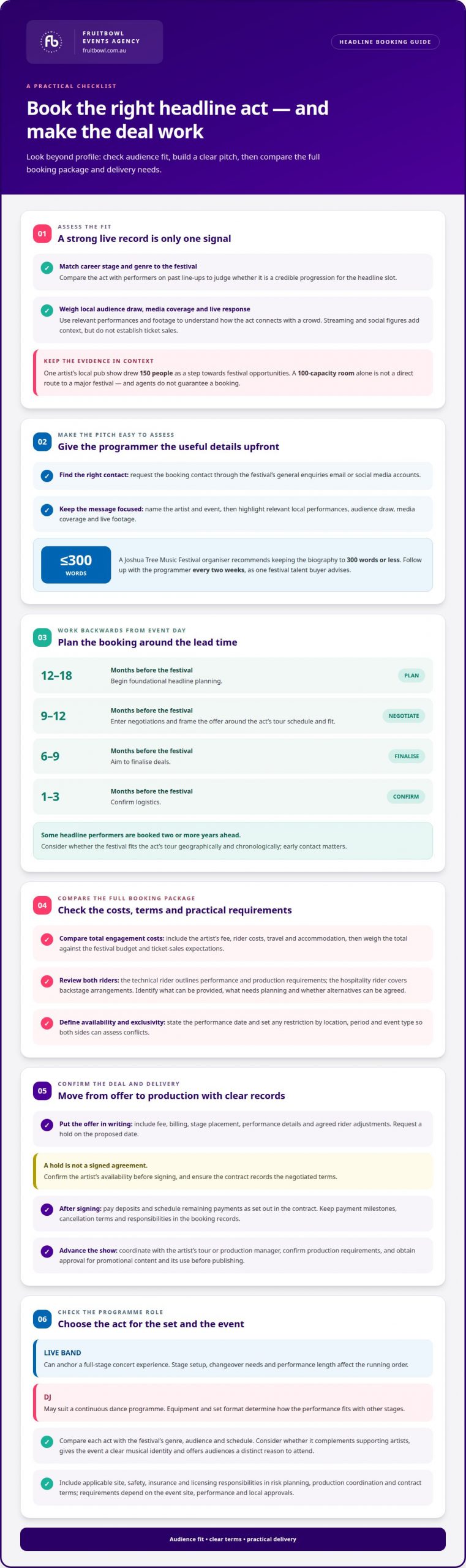
Start by matching an act’s career stage and genre with performers on the festival’s past lineups. That comparison helps identify a credible progression, rather than assuming a local following translates directly into a headline slot. One artist cited drawing 150 people to a local pub show as a step towards festival opportunities. A 100-capacity room alone shouldn’t be treated as a direct route to a major festival. Agents can help position an artist’s momentum, but they don’t guarantee a booking.
Finding artist agents and agencies
Use the festival’s general enquiries email or social media accounts to request the relevant booking contact. A concise message can help direct your approach to the right programmer or agent. Include the artist’s name and event context, then make a focused pitch rather than sending a lengthy introduction.
Make the pitch easy to assess. Highlight relevant local performances, audience draw and media coverage, then include live footage that demonstrates audience response. Streaming and social media figures can add context, but they don’t establish ticket sales. Keep the biography concise; a Joshua Tree Music Festival organiser recommends 300 words or less. Follow up with the programmer every two weeks, as one festival talent buyer advises.
Plan outreach around the event calendar. Begin foundational headline planning 12-18 months before the festival, enter negotiations 9-12 months before, and aim to finalise deals 6-9 months before. Confirm logistics 1-3 months before the event. Some headline performers are booked two or more years ahead, so early contact matters. Consider whether the festival fits the act’s tour schedule geographically and chronologically, then frame the offer around that fit.
Negotiating fees, riders and contract terms
Build the talent budget around the full engagement, not just the artist’s fee. Include rider costs, travel and accommodation, then compare the total with the festival budget and ticket-sales expectations. A lower fee can still involve substantial production or travel costs, while a higher offer may come with different requirements. Assess every proposal on the same basis before choosing the best fit.
Dates and exclusivity clauses affect an artist’s availability and opportunities to perform nearby. A festival offer should state the performance date and define any exclusivity by location, period and event type. Clear boundaries help the artist’s representatives assess conflicts and the organiser understand which other appearances are restricted. For example, a clause covering nearby shows is different from one applying across a broader region.
Review the technical and hospitality riders with the artist’s representatives during negotiations. The technical rider outlines performance and production requirements; the hospitality rider covers backstage arrangements. Identify what the festival can provide, what needs additional planning, and whether alternatives can be agreed. Resolving these details early makes the costs and delivery implications clear before the contract is approved.
Submit a formal offer and request a hold on the proposed performance date. Set out the fee, billing, stage placement, performance details and any agreed rider adjustments. A hold keeps the date under discussion while both sides assess the offer, but it does not replace a signed agreement. Confirm the artist’s availability before signing, and make sure the contract clearly records the negotiated terms.
After signing, pay deposits and schedule remaining payments as set out in the contract. Keep payment milestones, cancellation terms and agreed responsibilities together in the event’s booking records. Then advance the show with the artist’s tour or production manager. When staging complex headline sets, collaborating with international show producers such as Lar&Co can help ensure ambitious live entertainment concepts translate smoothly to the stage. Confirm production requirements and obtain approval for promotional content and its use before publishing campaign materials.
Festival headline bands and DJs
Choose a headline act based on the role it needs to play in the music festival. A live band can anchor a full-stage concert experience, while a DJ may suit a continuous dance programme. Start with the event’s genre, audience and schedule, then compare each act’s format, live presentation and appeal with that purpose.
Australian insurance, safety and licensing requirements for headliners depend on the event site, performance and applicable local approvals. Include relevant responsibilities in event risk planning, production coordination and contract terms, rather than assuming the same requirements apply to every performance.
Assess the set as well as the artist’s profile. A band’s stage setup, changeover needs and performance length affect the running order; a DJ’s equipment and set format determine how the performance fits with other stages. For example, a headline band needing a longer changeover may require a different slot from a DJ following another electronic act.
Compare headline options with the festival’s wider programme. Consider whether an act gives the event a clear musical identity, complements supporting artists and offers audiences a distinct reason to attend. An established act may bring recognition, while an emerging performer could introduce a different sound. The stronger choice supports the overall programme, not simply the biggest profile.
Plan the lineup announcement around confirmed commitments and the festival’s campaign schedule. For example, a multi-stage festival might announce headliners in stages, grouping each announcement around a distinct musical programme. This can help audiences understand the event’s range while keeping promotion aligned with the lineup.
Before finalising the lineup, map each headliner’s slot against stage capacity, sound transitions and audience movement. A DJ closing an electronic stage, for instance, may serve a different purpose from a band opening the main stage. This comparison helps distinguish an act’s promotional value from its practical contribution to the event-day programme.
How do Australian festivals book headline acts?
Booking headline acts for festivals starts with a defined programme brief, not a wish list of famous names. Set the event’s musical direction, intended audience and the role of the headline slot. Then build a shortlist that balances artistic fit with practical priorities, including the programme’s overall shape and each act’s place in it.
For each shortlisted performer, identify the appropriate booking contact and prepare a concise, tailored approach. Include the festival’s identity, proposed date and why the artist suits the event. Booking headline acts for festivals can require early decisions: some headliners are booked two or more years ahead, so begin planning well before the lineup is announced.
Be ready to respond efficiently when an offer is under consideration. Top agents are being given 48-hour deadlines to accept booking offers, so agree internally who can approve the offer and its terms. A clear decision path helps the festival respond promptly without losing sight of its budget, programme priorities or other shortlisted acts.
Track each artist’s status from the initial approach through availability discussions and agreement. Record the contact, date, current position and next action in a shared booking schedule. This gives programming and production teams a common reference, especially when several offers are progressing at once or a preferred act’s schedule changes.
Keep outreach purposeful. One festival founder said artist booking emails had led to offers dozens of times across 21 years and 41 festivals booked. That example supports a practical approach: make each message relevant, concise and easy to assess, then follow up professionally. A considered outreach process helps turn a strong programme idea into a clear booking decision, while keeping alternative acts in view.
Fruitbowl Events Agency: Festivals & Public Events
Fruitbowl Events Agency supports festivals and public events with strategic planning, logistics, entertainment programming and on-site delivery. Bring in the team when artist selection needs to connect with the wider event plan, from shaping the programme to coordinating its delivery.
For a festival, this integrated approach helps align headline bookings with the event’s audience, schedule and production requirements. It also connects entertainment planning with the operational decisions that bring the programme to life. Fruitbowl Events Agency can coordinate these moving parts as part of a broader event management process.
If you’re planning a festival or public event, contact Fruitbowl Events Agency to discuss your event.
Move from shortlist to festival plan
Turn your preferred headline act into a decision that supports the festival’s wider objectives. Align the programme direction with the event’s audience, operational priorities and the experience you want to create. This gives the booking a clear purpose beyond its place on the lineup.
As planning progresses, keep the creative vision connected to the practical delivery plan. Clear ownership of decisions helps programming, logistics and on-site delivery work towards the same outcome. A considered approach to booking headline acts for festivals can shape both the audience experience and the work needed to deliver it.
Fruitbowl Events Agency delivers Festivals & Public Events, as well as Corporate Events and Conferences & Seminars. Its event management work brings planning, logistics, entertainment programming and delivery together around your event’s objectives.
Contact Fruitbowl Events Agency to discuss your festival plans and the next steps for your programme. A clear plan is a strong place to begin.
Frequently Asked Questions
Do You Consider Live Performance Experience and Past Festival Appearances When Booking Artists?
Yes. Live performance experience and previous festival appearances help show how an artist may suit a headline slot. Look beyond festival credits: consider audience response, stage format and fit with your programme. For example, a strong club set can demonstrate performance quality, while a relevant festival appearance can show how the act connects with an outdoor event and its audience.
How Far in Advance Should Artists Be Reaching Out to Programmers for the Best Shot at Getting Booked?
Artists should reach out early, with timing shaped by the festival’s booking cycle and the act’s readiness. Some headline bookings happen two or more years ahead, so a concise introduction well before the event can give programmers time to consider the fit. Include relevant performance history and a clear point of difference. If there’s no immediate response, a measured follow-up can keep the conversation active.
When should festivals book headline acts in Australia?
Start planning headline bookings 12-18 months before the festival, with some acts secured two or more years ahead. A useful sequence is to begin foundational planning 12-18 months out, enter negotiations 9-12 months out, finalise deals 6-9 months out, then confirm logistics 1-3 months before the event. Earlier planning gives the team time to manage competing artist schedules and production decisions.
How much does it cost to book a headline act in Australia?
There is no single standard fee for a headline act. The amount depends on the artist, date, performance requirements and wider booking arrangement. Budget for more than the performance fee: travel, accommodation and rider costs also affect the total. Compare offers by the full cost of delivering each booking, then consider how each option fits the festival’s audience, ticket strategy and available talent budget.
What information should a festival include in an artist booking offer?
A clear offer should identify the festival, proposed performance date, fee, billing, stage placement and performance details. Include proposed exclusivity terms and explain the event’s location and audience context, so representatives can assess schedule and fit. Set out how technical and hospitality requirements will be handled. For example, specify proposed rider adjustments rather than relying on assumptions during later production planning.
What are the steps for negotiating and contracting a headline act?
First, confirm the artist’s availability and send a formal offer with the proposed terms. Then discuss the fee, billing, date restrictions, and technical and hospitality riders with the artist’s representatives. Record agreed changes and sign a contract setting out responsibilities and payment terms. Pay deposits as required by the contract. After signing, coordinate show details with the artist’s tour or production manager and obtain approval for promotional content.
OUR BLOG
Event Insights & Expertise
Our blog is your go-to resource for all things events. From expert insights and the latest industry trends to practical planning tips, we share everything you need to deliver standout experiences.
Contact Us